Dingle Way vs Beara Way: Which Kerry and Cork Peninsula Walk Suits You?
Two peninsulas, two long-distance loops, and one question we hear every winter from walkers planning their first Irish trail: Dingle Way or Beara Way? Both are waymarked, both hug the wild Atlantic edge of the south-west, and both are walked by us (and by our guests) every season. But they are not the same walk. One is the compact, celebrated crowd-pleaser; the other is the quieter, wilder, slightly harder sibling. Here is how to choose between the Dingle Way and the Beara Way.
The Dingle Way and the Beara Way at a glance
| Dingle Way | Beara Way | |
|---|---|---|
| County | Kerry | Cork and Kerry |
| Shape | Loop around one compact peninsula, Tralee to Tralee | Loop around a longer, narrower peninsula |
| Length | About 162 km | Longer full loop; our 8-day itinerary covers about 120 km, Kenmare to Glengarriff |
| Typical daily distance | 12–25 km | 17–24 km |
| Character | Dramatic, popular, culturally rich | Remote, wild, quiet |
| Best for | First long-distance walk, scenery and culture | Walkers who want space and solitude |
Scenery: concentrated drama versus big empty spaces
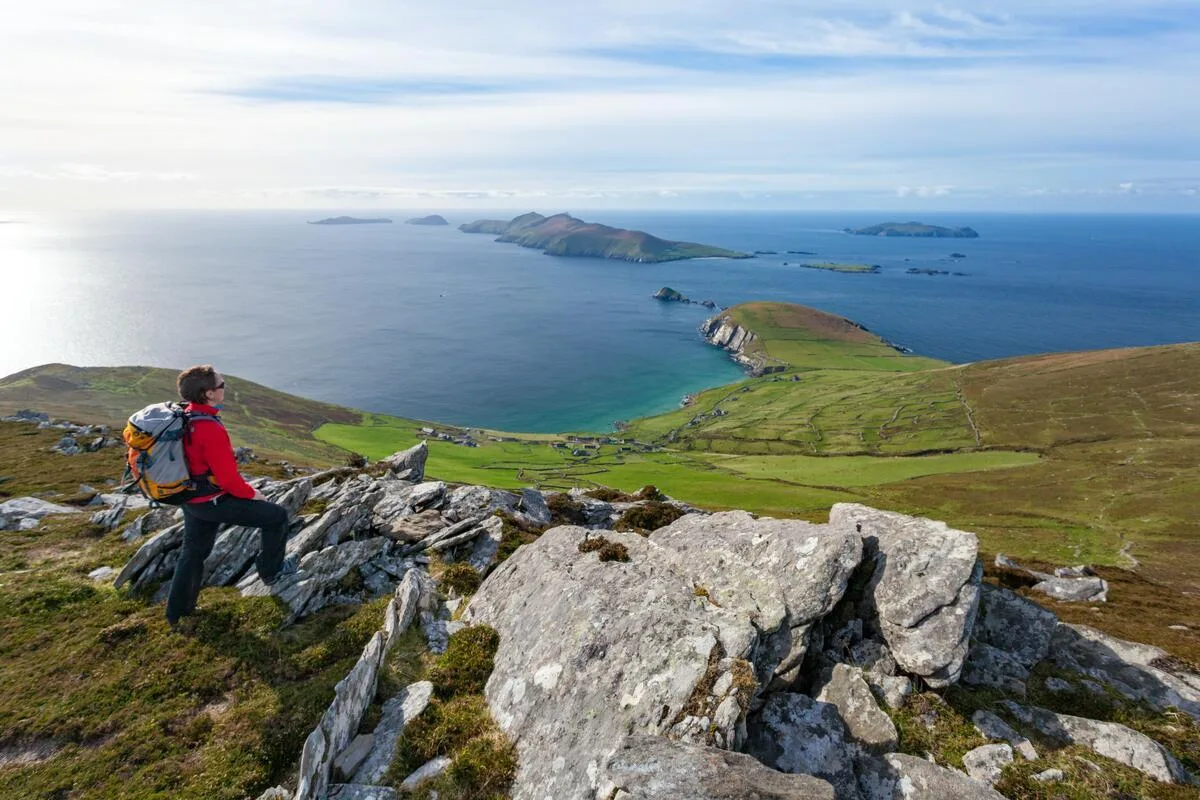
The Dingle Way packs an astonishing amount into a small area. Sea cliffs, long beaches, the shoulder of Mount Brandon (close to 950 m and one of Ireland's great mountains), the Atlantic always on one side of you, and views out to the Blasket Islands as you round Slea Head. Almost every day gives you a different postcard.
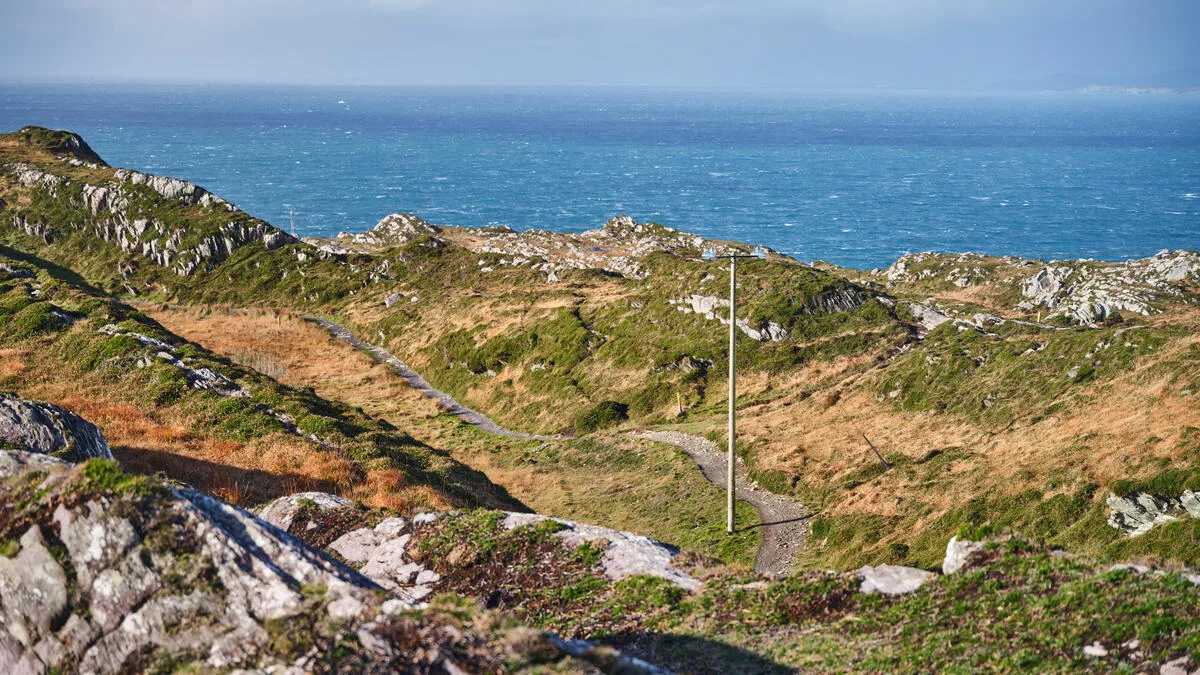
The Beara Way is more subtle and more spacious. You cross high heather ridges and boggy upland, drop down to Lauragh's wooded glens, and walk out to the old copper-mining landscape around Allihies, where engine houses stand against the sea. There are fewer famous viewpoints, but also far fewer people looking at them. If Dingle is a concert, Beara is a quiet session in the corner of a pub.
Difficulty and terrain
Neither trail is technical, but they ask different things of you. The Dingle Way has short, steep climbs and some boggy sections, but the days are varied and there is usually a village within reach. On the Beara Way, days of 17 to 24 km on rougher, less-trodden ground add up, and the waymarking, while good, feels more remote. We grade both as moderate, but if you are nervous about distance or navigation, Dingle is the easier first step.
Villages, culture and atmosphere
Dingle is the livelier of the two. The peninsula is part of the Gaeltacht, so Irish is spoken in everyday life, and Dingle town is famous for its traditional music sessions, seafood and pubs. The Beara has its own charms – Kenmare, Allihies, Castletownbere and Glengarriff are small, friendly places with excellent food – but the atmosphere is calmer. Expect fewer fellow walkers and more evenings of simple, quiet conversation.
Crowds, logistics and accommodation
Because the Dingle Way is better known, it books up earlier in summer, and you will meet more walkers on the trail. Services are good, with a village at the end of most days. The Beara Way is quieter and its accommodation is more spread out, which makes self-guided planning harder: it rewards a supported itinerary with booked rooms and luggage transfers so that you never have to worry about the next bed or a long walk at the end of a long day.
Which should you choose?
Choose the Dingle Way if this is your first long-distance walk, you want constant variety and dramatic coastal scenery, you enjoy lively villages and music in the evening, and you like the reassurance of other walkers and good services.
Choose the Beara Way if you have walked a few trails before, you want solitude and wide-open landscapes, you are interested in mining heritage and wild coast, and you are happy with longer, quieter days.
Can't decide? Many of our guests do both in successive years – Dingle first, Beara next – and some combine them on a longer trip. If you are weighing Dingle against the neighbouring Kerry Way instead, read our Dingle Way vs Kerry Way comparison.
Walk them with Walking Holiday Ireland
We run both as fully supported self-guided holidays: handpicked accommodation, luggage transfers, detailed route notes and a local phone number if you need us. Explore the 8-day Dingle Way or the 8-day Beara Way, or read our full guides to the Dingle Way and the Beara Way. You can also see how they sit alongside the other trails in our guide to Ireland's National Waymarked Ways, or get in touch and we'll help you decide.
Frequently Asked Questions
Which is harder, the Dingle Way or the Beara Way?
The Beara Way is generally the harder of the two, mainly because of longer days on rougher, more remote ground. The Dingle Way has steeper short climbs but is more varied and better served by villages.
Which is more scenic?
Both are superb. The Dingle Way offers more famous, concentrated coastal drama; the Beara Way offers wilder, emptier landscapes and old copper-mining scenery.
Which is better for a first long-distance walk?
The Dingle Way, for most people. It is more popular, better served by services and a gentler introduction to multi-day walking.
How many days do I need for each?
Most walkers take about eight days for the Dingle Way. Our Beara Way itineraries run from five to eight days, with eight giving the most comfortable pace.
Is the Beara Way quieter than the Dingle Way?
Yes. The Beara Way sees far fewer walkers, which is a big part of its appeal.
Can I walk both in one trip?
Yes, though most guests do them in separate years. The two peninsulas are neighbours, so combining them is possible with some planning; get in touch and we'll suggest a route.