Monasterboice: High Crosses, Round Tower and Visitor Guide
Monasterboice (in Irish, Mainistir Bhuithe) is an early Christian monastic site in County Louth, about 8 km north of Drogheda and just west of the M1. It is best known for its carved high crosses: Muiredach's Cross, often called the finest high cross in Ireland, and the West Cross, the tallest in the country at about 7 metres. A round tower 28.5 metres high stands beside them. The site is free, open all year, and most people see it properly in about an hour.
Monasterboice is on our home patch here in County Louth. When walkers drive north from Dublin to start a walking holiday on the Cooley Peninsula, it is the stop we always suggest. It is quiet, it costs nothing, and you can stand close enough to the carvings to see the faces that monks cut into the stone over a thousand years ago.
Monasterboice at a glance
- Where: Monasterboice, Co. Louth, about 8 km north of Drogheda, just west of the M1 motorway (you can see the round tower from the road).
- Cost: free. There is no ticket office.
- Open: all year round.
- What you will see: three high crosses, a round tower, the ruins of two later churches, a sundial and an old graveyard.
- Time needed: about an hour; longer if you love photographing carvings.
- Parking: a free car park across a minor road from the site. Paths inside are level but gravel-covered.
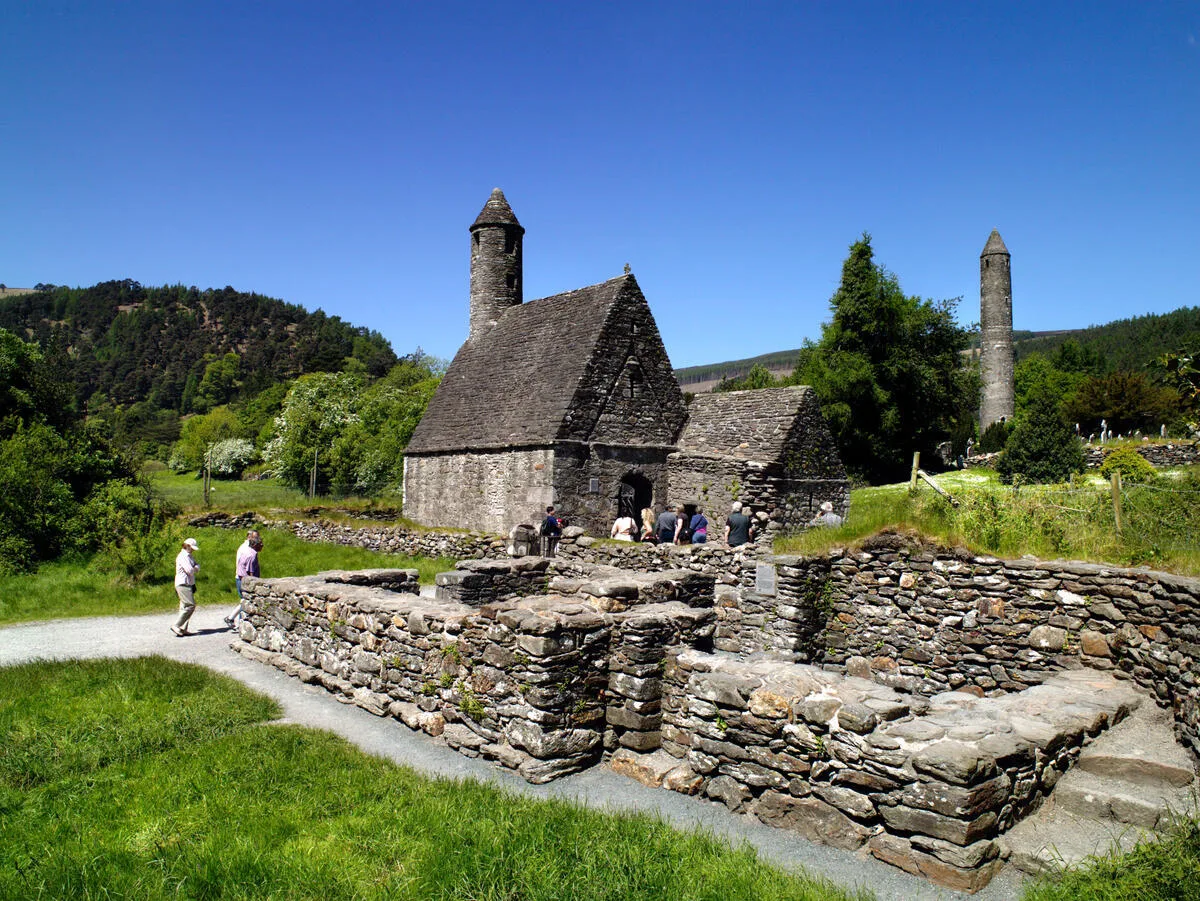
A short history of Monasterboice
The monastery takes its name from Saint Buithe (also spelled Buite), who died around 520 and is linked in tradition with Saint Colum Cille. From those beginnings, Monasterboice grew into one of the leading centres of religion and learning in early medieval Ireland.
A few names and dates bring the place to life:
- Abbot Muiredach, who died in 923 or 924, is remembered in the inscription on the great cross that carries his name.
- Flann Mainistrech, the "lector" (head teacher) of Monasterboice, was a celebrated scholar and historian. He died in 1056.
- In 1097 the bell tower was burned, and the monastery's books and treasures were lost with it.
- In 1142 the Cistercians founded Mellifont Abbey a few kilometres away. Monasterboice had thrived until then, but its importance faded as Mellifont rose.
- In 1520 the monastery's most precious relic, said to be the head of Saint Buithe, was stolen from the church.
The two church ruins you see today were built in the 14th century or later, long after the crosses were carved. People sometimes search for "Monasterboice Abbey", but what you will find here is an early monastic site, not a large abbey building like Mellifont.
The high crosses of Monasterboice
The crosses at Monasterboice belong to a group of sculpted stone crosses made across Ireland in the 9th and 10th centuries. They were carved as teaching tools as much as monuments: each panel tells a Bible story that a visitor could "read" in stone.
Muiredach's Cross (the South Cross)
Muiredach's Cross is about 5.5 metres tall and is widely seen as the finest high cross in Ireland. An Irish inscription at the base of the shaft remembers Abbot Muiredach. On the east face, the Last Judgement fills the head of the cross, with Saint Michael weighing souls below Christ. The west face shows the Crucifixion, and another panel shows Christ being mocked by soldiers.
Look closely at the base and the lower panels too. The carvers had a sense of humour: you can find two men pulling each other's beards, and a pair of cats. They are easy to miss, and they make the cross feel very human.
The West Cross (the Tall Cross)
The West Cross stands about 7 metres high and is the tallest high cross in Ireland. It is built from four stones: a base, the shaft, the cross head and a capstone. The east side shows scenes from the Old Testament, and the west side shows the Crucifixion. It is more weathered than Muiredach's Cross, so the carvings are softer, but its height alone is worth the visit.
The North Cross
The third cross, in the northern part of the graveyard, is plainer and has suffered more from the weather. It is often passed by, but it completes the set and gives you a sense of how many crosses may once have stood here.
Our tip: come early in the morning or late in the afternoon. When the sun is low, the shadows pick out the carvings far better than in flat midday light.

The round tower
The round tower at Monasterboice is 28.5 metres high and has six storeys. Most of the top storey and the roof are missing, so it was once even taller. It was probably built soon after the fire of 1097, to replace an earlier wooden bell tower. Round towers like this served as bell towers and as safe stores for a monastery's treasures. You view it from the ground, and it makes a striking frame for photographs of the crosses.
Visiting Monasterboice: practical tips
- Getting there: follow the signs from the M1 north of Drogheda. The car park is across a small road from the entrance, so take care crossing.
- Underfoot: the paths are level gravel, but the grass between the graves is often wet. Walking shoes are better than sandals.
- Respect the graveyard: Monasterboice is still a burial ground. Please keep to the paths and do not climb on the crosses or grave slabs.
- Guided visits: the site is unguided, but guided tours can be arranged through Drogheda Tourist Office.
- Combine it: Mellifont Abbey and the Boyne Valley are close by, so you can easily make a heritage day of it.
Walking near Monasterboice
Monasterboice is a short visit rather than a hike, but it sits in some of the best walking country in the east of Ireland.
- The Boyne Valley: just to the south are the passage tombs of Brú na Bóinne. Our walker's guide to Newgrange and the Boyne Valley covers how to visit them on foot.
- Carlingford and the Cooley Peninsula: head north on the M1 and you reach the mountains, forest tracks and sea views of the Cooley Peninsula. See our guide to Carlingford and the Cooley Peninsula and the Cooley & Mournes walking area.
- Pilgrim routes: if Ireland's early Christian story draws you in, our guide to Irish pilgrim paths covers sacred walking routes across the country.
For more ideas on weaving history into a walking trip, read how to add history and folklore to your hiking itinerary and how to choose a historically rich hiking destination in Ireland.
Monasterboice: frequently asked questions
Is Monasterboice free to visit?
Yes. Monasterboice is free to visit and open all year round. There is a free car park across a minor road from the site.
How long do you need at Monasterboice?
About an hour is enough for most visitors to see the three high crosses, the round tower and the church ruins. Allow more time if you want to study and photograph the carvings.
How tall are the Monasterboice high crosses?
Muiredach's Cross is about 5.5 metres tall. The West Cross, at about 7 metres, is the tallest high cross in Ireland. The round tower beside them is 28.5 metres high.
Where is Monasterboice?
Monasterboice is in County Louth, about 8 km north of Drogheda and just west of the M1 motorway. It is signposted from the motorway.
Who founded Monasterboice?
The monastery is named after Saint Buithe (Buite), who died around 520. It became a major centre of religion and learning until nearby Mellifont Abbey was founded in 1142.
Walk the Cooley Peninsula, with Monasterboice on the way
Let us take care of the details: hand-picked accommodation, luggage transfers and clear route notes. You stop at Monasterboice on your way north, then spend your days walking the mountains above Carlingford Lough.
Photo Gallery