Glenveagh National Park: Walking Guide to Trails, Castle and Wildlife
Glenveagh National Park: Walking Guide to Trails, Castle and Wildlife
Glenveagh National Park in a nutshell: Glenveagh is Ireland's second-largest national park, about 16,000 hectares of mountains, lakes, bog and native woodland in the Derryveagh Mountains of north-west Donegal. Entry is free. There are six marked walking trails, from the 1 km Garden Trail to the 8 km Glen Walk. Most visitors walk the flat 3.5 km Lakeside Walk from the visitor centre to Glenveagh Castle. Allow half a day, or a full day if you want to add a second trail.
My name is Cliff, and I run Walking Holiday Ireland. I've been walking in Glenveagh for years, and every visit still surprises me. The light changes, the colours shift, and there's always a corner of the park I haven't explored. If you want a walk that feels remote and wild, Glenveagh National Park delivers like nowhere else in Ireland.
Here's everything you need to know before you go: the best walks, the castle, the wildlife, how to get there and when to visit.
Glenveagh National Park at a Glance
- Where: the Derryveagh Mountains, north-west County Donegal, about 24 km from Letterkenny.
- Size: about 16,000 hectares, including most of the Derryveagh Mountains, the Poisoned Glen and part of Errigal.
- Entry: free. There is a small charge for the castle tour and the shuttle bus.
- Marked trails: six, from 1 km to 8 km. You are also free to roam the open hills.
- Highlights: Glenveagh Castle and gardens, Lough Veagh, red deer and golden eagles.
- Good for: everyone, from an easy lakeside stroll to a full day in the mountains.
What Makes Glenveagh Special
Most people who visit Ireland head for Killarney or Wicklow. Both are great parks, and I love them. But Glenveagh is different. There are no crowds here. On a weekday in spring or autumn, you can walk for hours and not meet another soul. That kind of peace is rare in a national park.
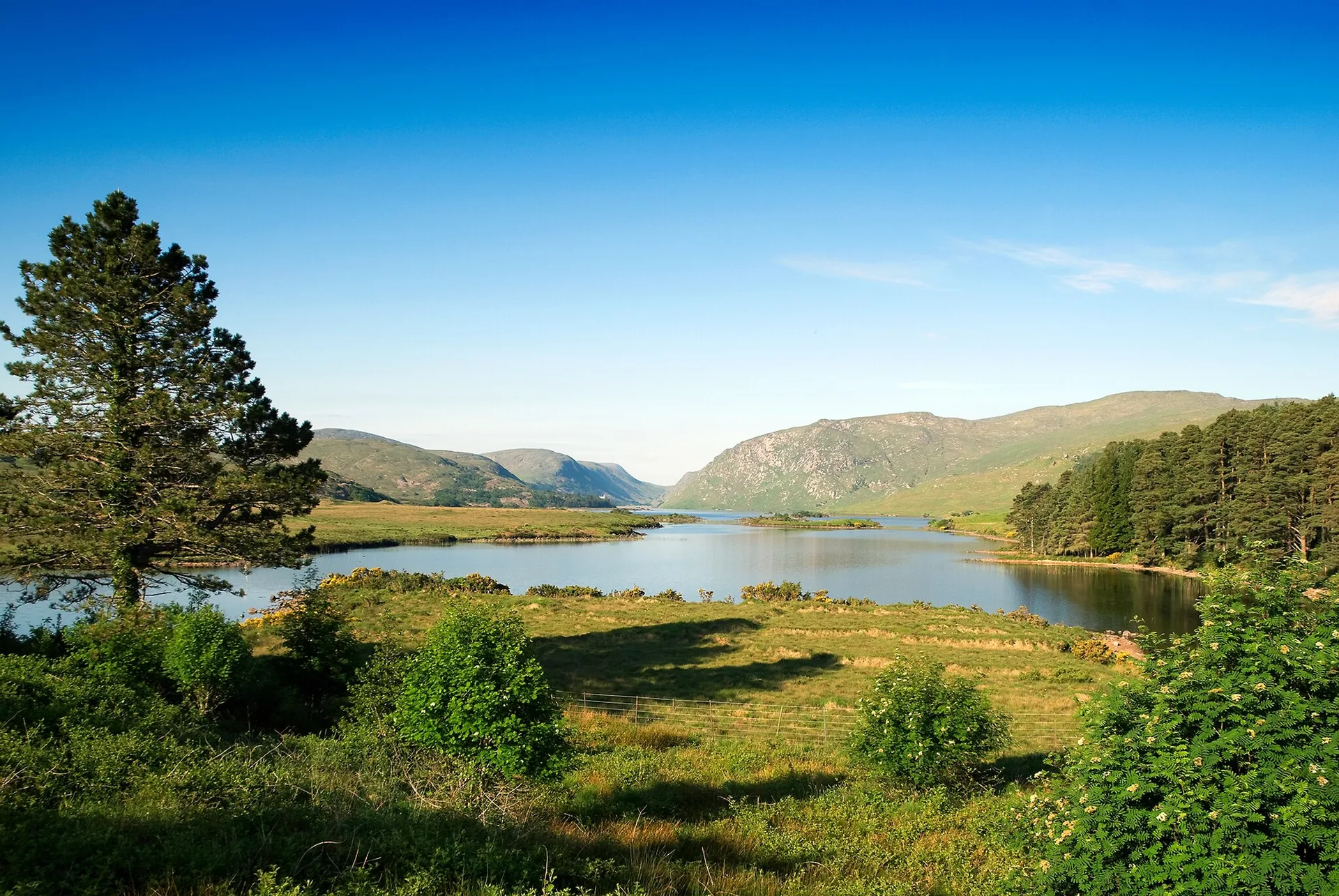
The park sits in one of the most remote valleys in Ireland. Mountains rise steeply on both sides of Lough Veagh, a long, narrow lake at the heart of the park. Native oak and birch woodland clings to the lower slopes, giving way to heather, bog and bare granite above.
It's a place shaped by ice, wind and time. Red deer roam the hillsides, and golden eagles, brought back to Glenveagh in 2001, can sometimes be seen circling above the ridges. There are very few places in Ireland where you can hope to see both on the same walk.
Best Walks in Glenveagh National Park
The park has six waymarked trails. Distances and times below are from the National Parks and Wildlife Service Glenveagh walking trails guide. Two of them are one-way, so plan how you'll get back before you set off.
| Trail | Distance | Time | Route | Terrain |
|---|---|---|---|---|
| Lakeside Walk | 3.5 km | 40 min | One way (walk back or take the shuttle) | Mostly flat gravel path |
| Derrylahan Nature Trail | 2 km | 45 min | Loop | Gravel track, flat with some steep parts |
| Garden Trail | 1 km | 1 hr | Loop | Gravel path, wheelchair accessible but steep in one or two places |
| View Point Trail | 1 km | 35 min | Loop | Steep, stony path with very steep short sections |
| Glen (Bridle Path) Walk | 8 km | 2 hrs | One way | Mostly flat track, rising gently over the last 3 km |
| Lough Inshagh Walk | 7 km | 1 hr 30 min | One way | Stony track, ending on a quiet tarred road |
Glenveagh trail map
Elevation profile
Distances and times: NPWS trail leaflet. Route lines: © OpenStreetMap contributors (ODbL), drawn along mapped paths. A guide only: follow the waymarks on the ground.
Lakeside Walk (easy)
This is the walk almost everyone does, and for good reason. It runs 3.5 km from the visitor centre along the shore of Lough Veagh to Glenveagh Castle. It's flat and well surfaced, so it suits families and anyone who wants a relaxed walk. You can take the shuttle bus back, but I'd walk both ways if you can. The views across the lake are half the reason to come.
Derrylahan Nature Trail (easy to moderate)
A 2 km loop close to the visitor centre, through woodland and open ground. It's short, but it has a few steep bits. Go early in the morning and keep an eye out for red deer at the edge of the trees.
Garden Trail (easy)
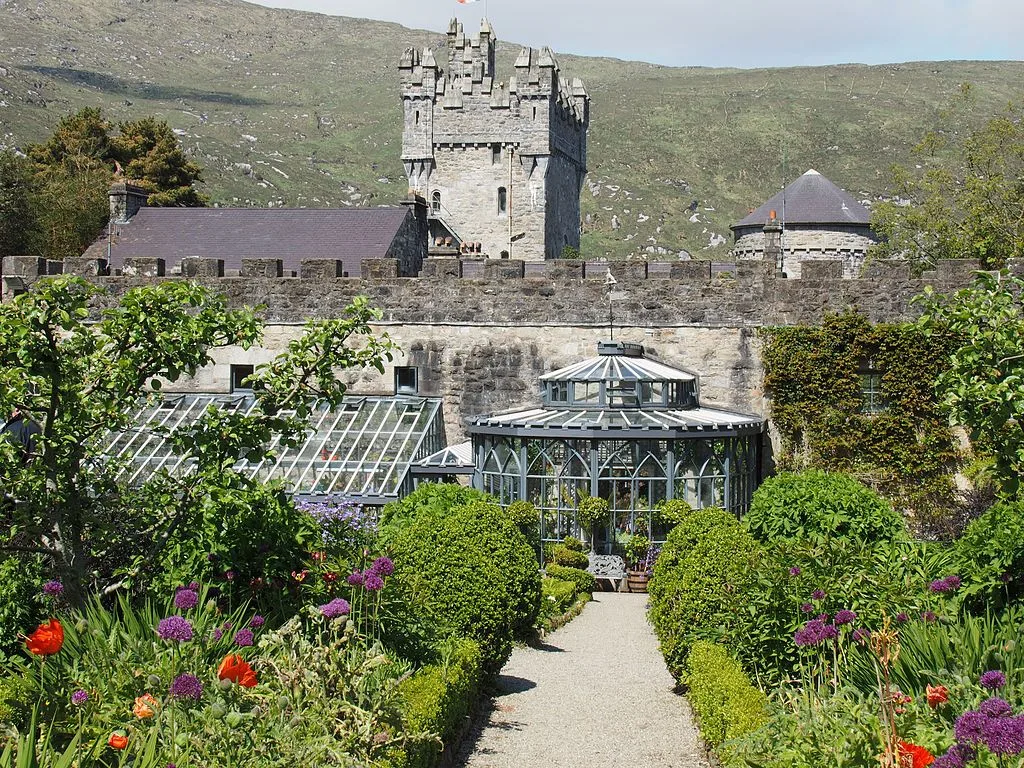
A 1 km loop around the castle gardens. It's gentle and mostly accessible, and it's the best way to see the terraces, the walled garden and the exotic trees and shrubs up close.
View Point Trail (short but steep)
This one starts at the castle and climbs steeply above it. It's only about 1 km, but some sections are very steep, so take your time. The reward is the classic view down Lough Veagh with the castle below you. If you only do one climb in Glenveagh, make it this one.
Glen Walk on the Bridle Path (moderate)
From the back of the castle, an old bridle path runs 8 km up the glen. It's mostly flat, then rises gently over the last 3 km. This is where you feel the real wildness of the park: silence, space and mountains on every side. It's one way, so either walk back the same way or arrange to be collected.
Lough Inshagh Walk (moderate)
This 7 km walk starts near Lough Veagh, about 0.5 km from the castle, and crosses open granite and bog on a stony track before finishing on a quiet road. It's one of the best trails for wildlife. Red deer are sometimes seen along the path, and golden eagles hunt over this open ground. It's one way, so arrange your return before you start.
Off the trails: the Derryveagh Mountains
For experienced hillwalkers, the open mountains around the park offer serious days out. Slieve Snaght (683 m) gives views across much of Donegal on a clear day. These are unmarked routes over open, boggy mountain ground. You need good navigation skills, proper gear and mountain experience.
Which walk should you choose?
Half a day: walk the Lakeside Walk to the castle, do the View Point Trail, then walk or take the shuttle back. A full day: add the castle gardens and the Glen Walk or the Lough Inshagh Walk. With children: the Lakeside Walk and the Garden Trail are the easiest.
Glenveagh Castle and Gardens
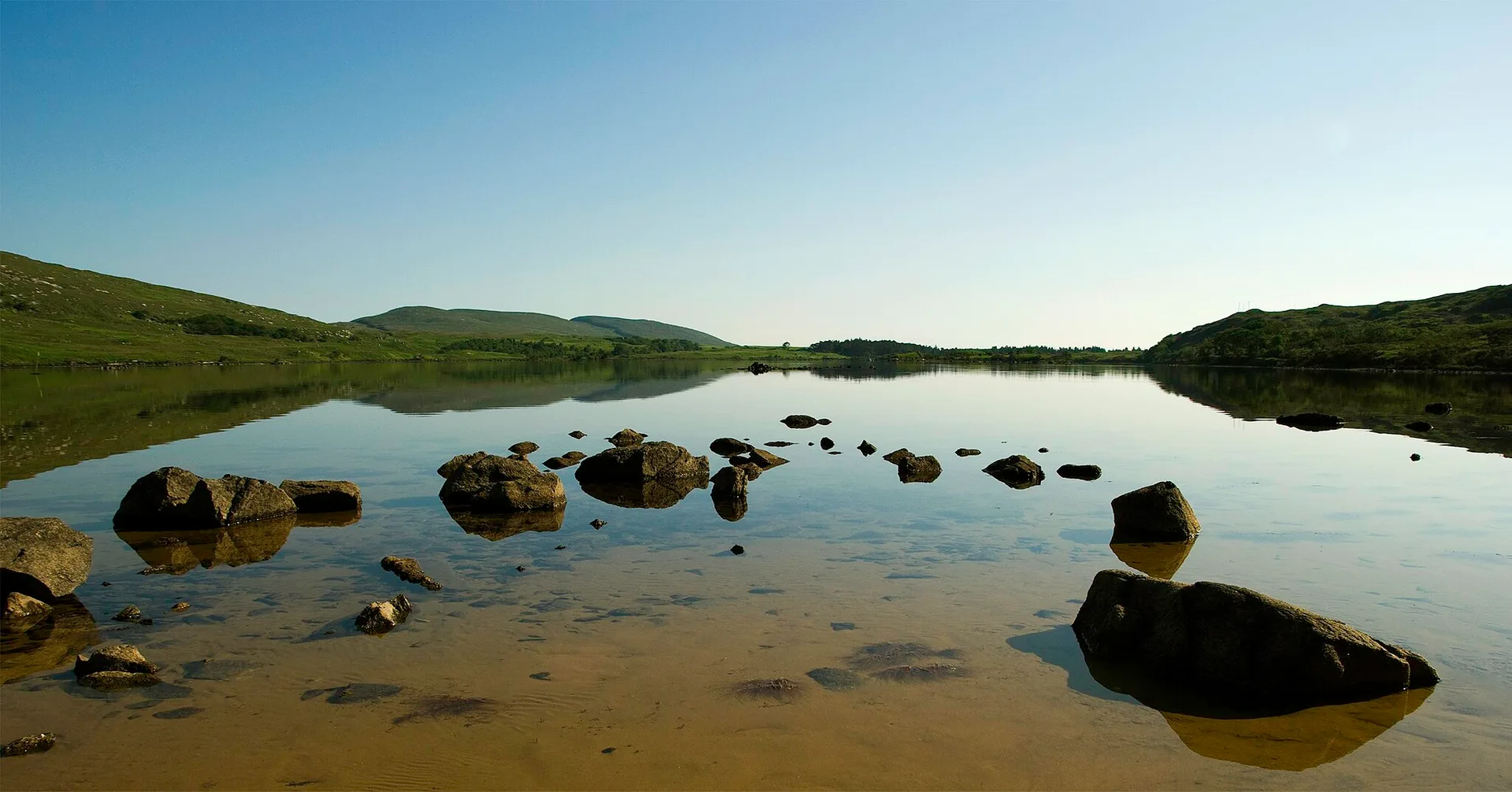
At the heart of the park sits Glenveagh Castle, built in the 1870s by John George Adair on the shore of Lough Veagh. His wife Cornelia began the gardens around 1890. Later the castle was owned by the American art collector Henry McIlhenny, who developed the gardens in the 1960s and 1970s.
The gardens are a real treat. This far north, you might not expect much to grow, but the climate is mild enough for plants from all over the world. You'll find Italian-style terraces, paths lined with rhododendrons, and a walled garden full of colour well into autumn. The castle itself is visited by guided tour, for a small charge.
Wildlife in Glenveagh
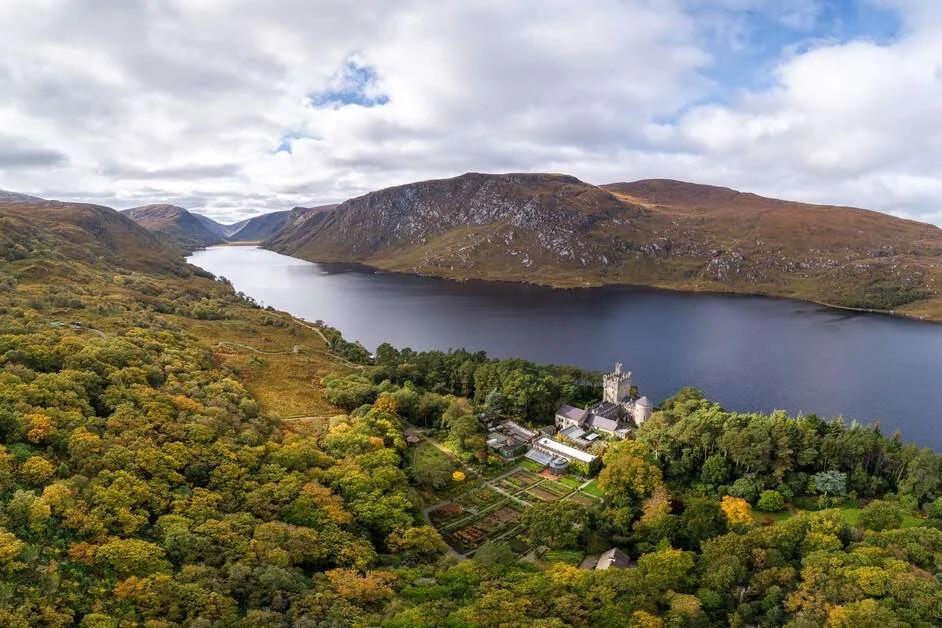
Glenveagh is one of the best places in Ireland to see wildlife. It's big and remote, so animals that have become rare elsewhere still do well here.
Red deer are the headline act. Early morning and late evening are the best times to spot them, especially at the edges of the woodland and along the Lough Inshagh path. In autumn you may hear the stags roaring during the rut.
Golden eagles were brought back to Glenveagh in 2001, almost a century after they last bred there. Numbers are still small, so a sighting is a real treat. Keep your eyes on the sky over the open hills.
The park is also home to peregrine falcons, Irish hares and plenty of woodland birds. In the bogs, look for sundew and butterwort, two small plants that catch and eat insects. If birds are your thing, our guide to birdwatching on Irish trails has more ideas.
Getting to Glenveagh National Park
Glenveagh is in north-west County Donegal, about 24 km from Letterkenny. From Dublin it's roughly a four-hour drive, and from Galway about three and a half hours. A car is by far the easiest way to get there.
The visitor centre at the park entrance has parking, toilets, a café and an exhibition about the park's nature and history. From here you can walk to the castle or take the shuttle bus. Letterkenny is the best base, with plenty of hotels, B&Bs and places to eat. The nearest village is Churchill.
The Wild Atlantic Way runs through Donegal, so a day at Glenveagh fits easily into a trip along the coast.
When to Visit Glenveagh National Park
You can walk in Glenveagh all year, but the best time to visit Ireland for walking is April to October.
Spring (April–May): fresh green in the woods, rhododendrons in the gardens, longer days and quiet trails.
Summer (June–August): the longest days and the warmest weather. Even in peak season Glenveagh stays quiet compared to the southern parks. Midges can be a nuisance in sheltered spots, so bring repellent.
Autumn (September–October): my favourite time. The hills turn gold and amber, the red deer rut begins and the park takes on a moody, atmospheric feel.
Winter: real solitude, but short days and rough weather. The castle and visitor centre may have reduced hours, so check before you travel.
What to Bring
Donegal weather changes fast. Even on a summer day, rain can roll in from the Atlantic with little warning. Bring waterproof layers, good walking boots and a warm layer, even in July.
For the Lakeside Walk and the Garden Trail, ordinary walking shoes are fine. For the View Point Trail and the longer walks, wear boots with good grip. For the open mountains, you'll need proper hillwalking gear, a map and a compass. Our packing list covers everything for a day walk in Ireland.
Combining Glenveagh with a Donegal Walking Holiday
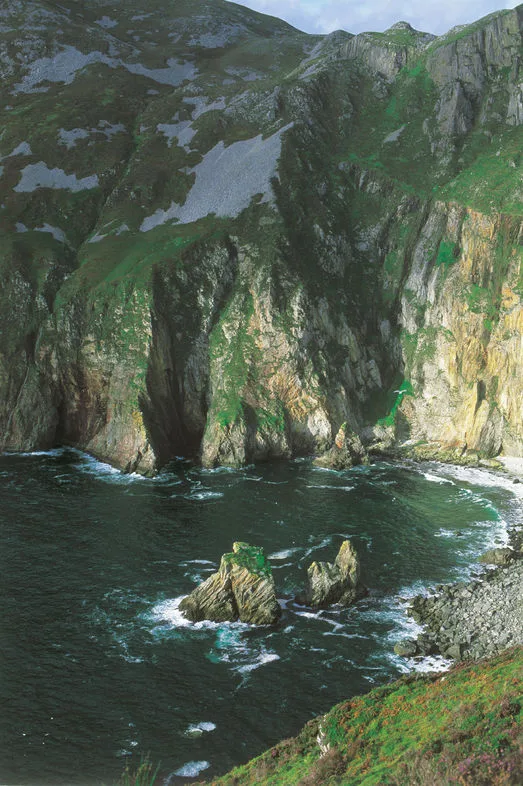
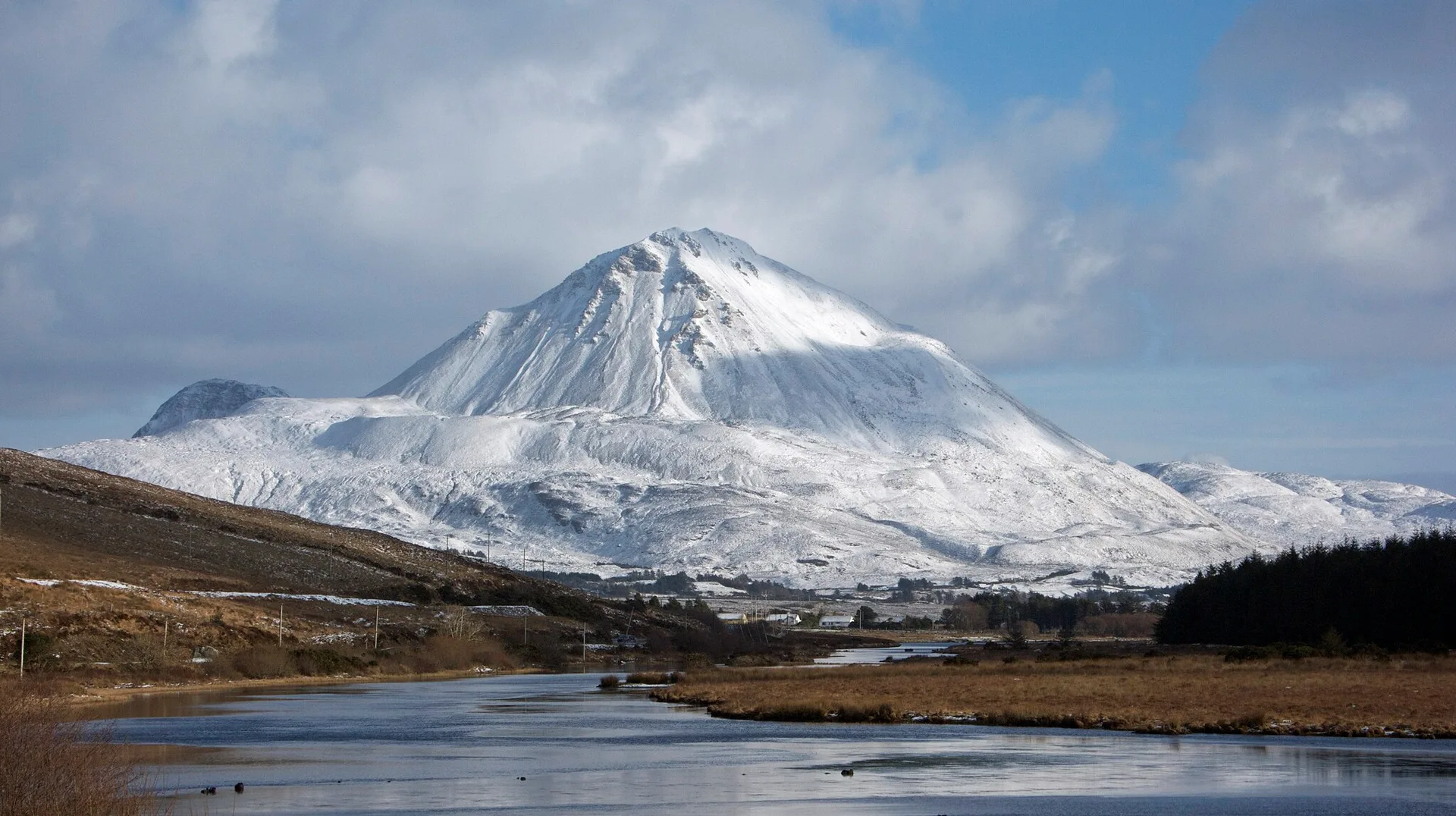
Glenveagh works brilliantly as part of a wider Donegal trip. Mount Errigal, Donegal's highest peak at 751 m, is about 15 minutes' drive from the park. The sea cliffs of Slieve League, among the highest in Europe, are about an hour south. For a longer adventure, the Slí Cholmcille is a beautiful pilgrim walk through south-west Donegal.
If you're collecting national parks, our guide to all of Ireland's national parks for walkers compares Glenveagh with Killarney, Connemara and the rest.
We offer self-guided walking holidays all over Ireland, or you can choose a guided tour if you'd like local company on the trails. Our tour grading page helps you find the right level.
Plan Your Visit to Glenveagh National Park
Donegal is less well known than Kerry or Wicklow for walking, and that's exactly why I love it. The scenery is world class, the people are warm and the trails are yours. Glenveagh National Park is the crown jewel of a region that deserves far more attention than it gets.
Whether you stroll the lakeside path to the castle, climb to the viewpoint or head up the glen, you'll see a side of Ireland most visitors miss. Get in touch with us at Walking Holiday Ireland and we'll help you plan a trip that does Donegal, and Glenveagh, justice.
Frequently Asked Questions
How long are the walks in Glenveagh National Park?
Is Glenveagh National Park free to visit?
Can you walk to Glenveagh Castle?
How much time do you need at Glenveagh National Park?
Where can you see red deer and golden eagles in Glenveagh?
Photo Gallery