How Fit Do You Need to Be for the Kerry Way?
If you can walk 20 km on hilly ground at home and set off again the next morning without dreading it, you are fit enough for the Kerry Way. Our tours are graded moderate. Most stages are 15 to 20 km with 300 to 560 m of climbing. There is one genuinely hard day: Foilduff to Waterville, 23.5 km with 759 m of ascent, about 8 hours on your feet. If that day sounds like too much, our 5- and 6-day Kerry Way tours leave it out completely.
That is the short answer. The rest of this guide gives you the numbers for every stage, so you can judge your own legs rather than take our word for it.
Kerry Way difficulty, stage by stage
These figures come from the GPS tracks we use on our own tours, not from guidebook estimates. We grade every stage in effort kilometres: the distance, plus one kilometre for every 100 m of climbing, plus extra for rough ground such as bog, exposed ridges or scrambling. That lets you compare a short, steep day with a long, flat one. Our grades are Easy (under 20 effort km), Moderate (20–26), Challenging (26–33) and Challenging+ (over 33). There is more on how this works in How hard is hiking in Ireland?
Stage | Distance | Ascent | Highest point | Walking time | Effort km | Grade |
|---|---|---|---|---|---|---|
Muckross House (Killarney) → Black Valley | 18.8 km | 433 m | 281 m | 6¼ h | 23.1 | Moderate |
Black Valley → Glencar | 18.8 km | 563 m | 383 m | 6½ h | 24.4 | Moderate |
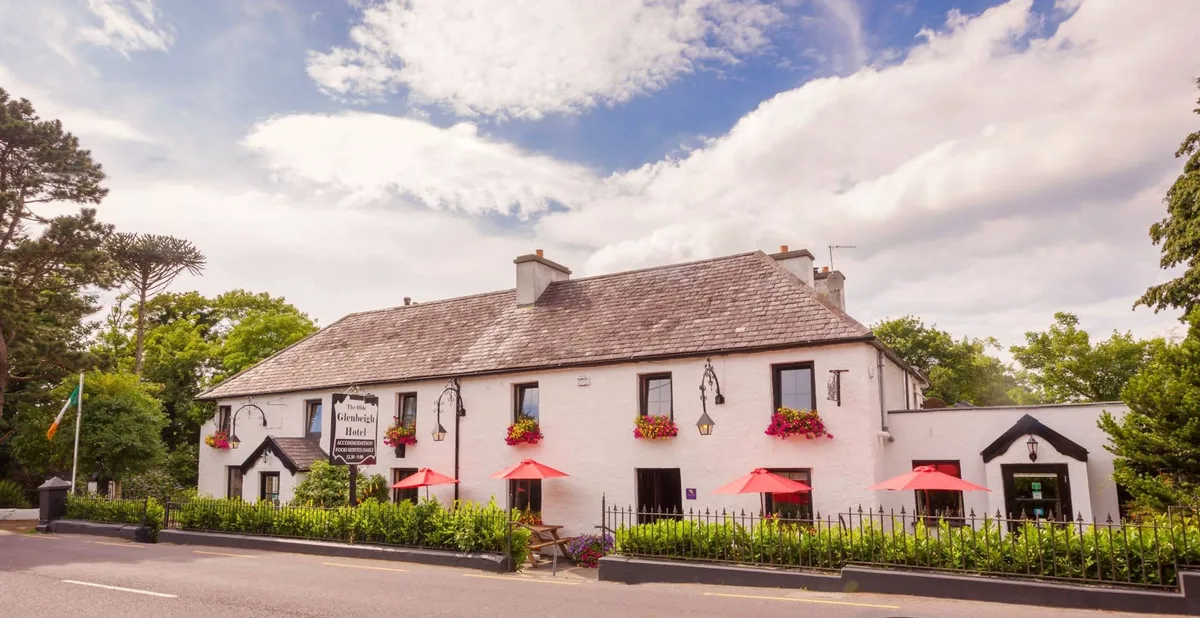
Glencar → Glenbeigh | 18.0 km | 287 m | 226 m | 5¾ h | 20.9 | Moderate |
Glenbeigh → Foilduff (for Cahersiveen) | 19.6 km | 372 m | 327 m | 6¼ h | 23.3 | Moderate |
Foilduff → Waterville | 23.5 km | 759 m | 372 m | 8¼ h | 31.1 | Challenging |
Waterville → Caherdaniel | 14.5 km | 305 m | 239 m | 4¾ h | 17.6 | Easy |
Caherdaniel → Sneem | 16.6 km | 398 m | 194 m | 5½ h | 20.6 | Moderate |
Blackwater Bridge → Kenmare | 20.5 km | 437 m | 194 m | 6¾ h | 24.9 | Moderate |
Kenmare → Killarney | 19.4 km | 413 m | 323 m | 6¼ h | 23.5 | Moderate |
Walking times are for a steady pace with short stops. Add an hour for a long lunch, photographs and a pint you didn't plan.
The hardest day on the Kerry Way
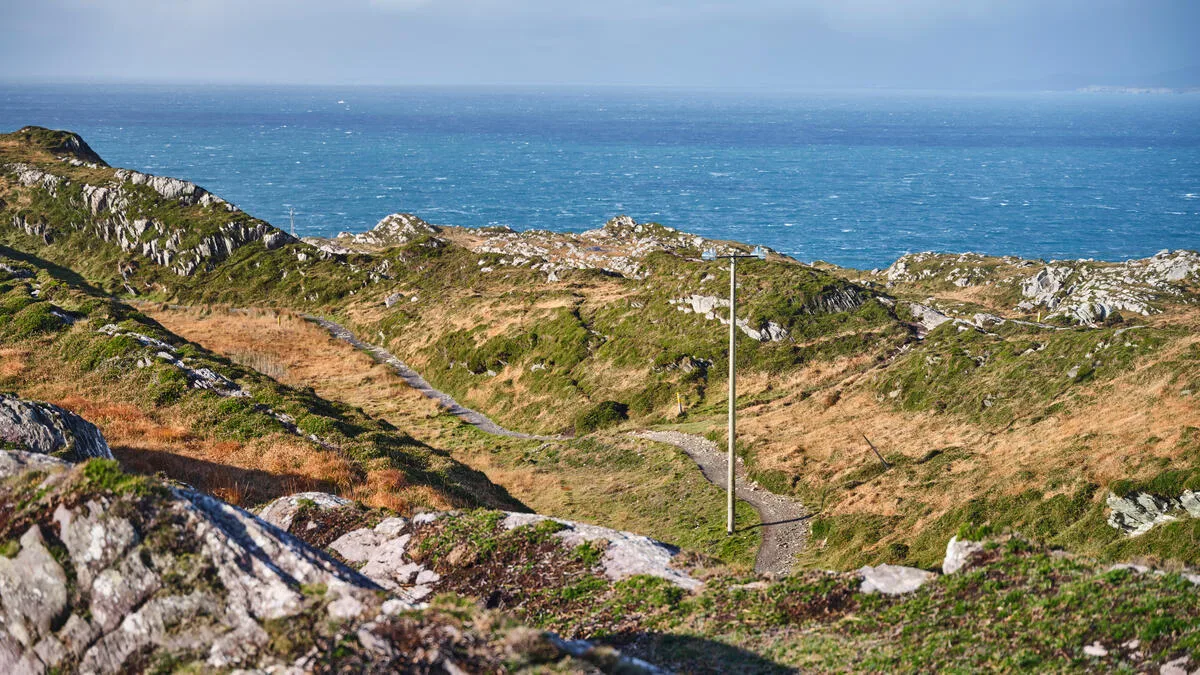
Foilduff to Waterville stands out for two reasons. It's the longest stage, and it has the most climbing. You climb almost straight away, onto open hillside above the Atlantic. About 70% of the day is on trail rather than road, so it's slower underfoot than the numbers suggest. On a clear day the Skellig Islands appear on the horizon, and most walkers tell us it's the day they remember best.

Treat it with respect, not fear. By the time you reach it on our 7-, 8-, 10- and 12-day tours, you'll already have one to four days of walking in your legs. Leave early, carry plenty of water and food, and don't rush the long descent into Waterville.
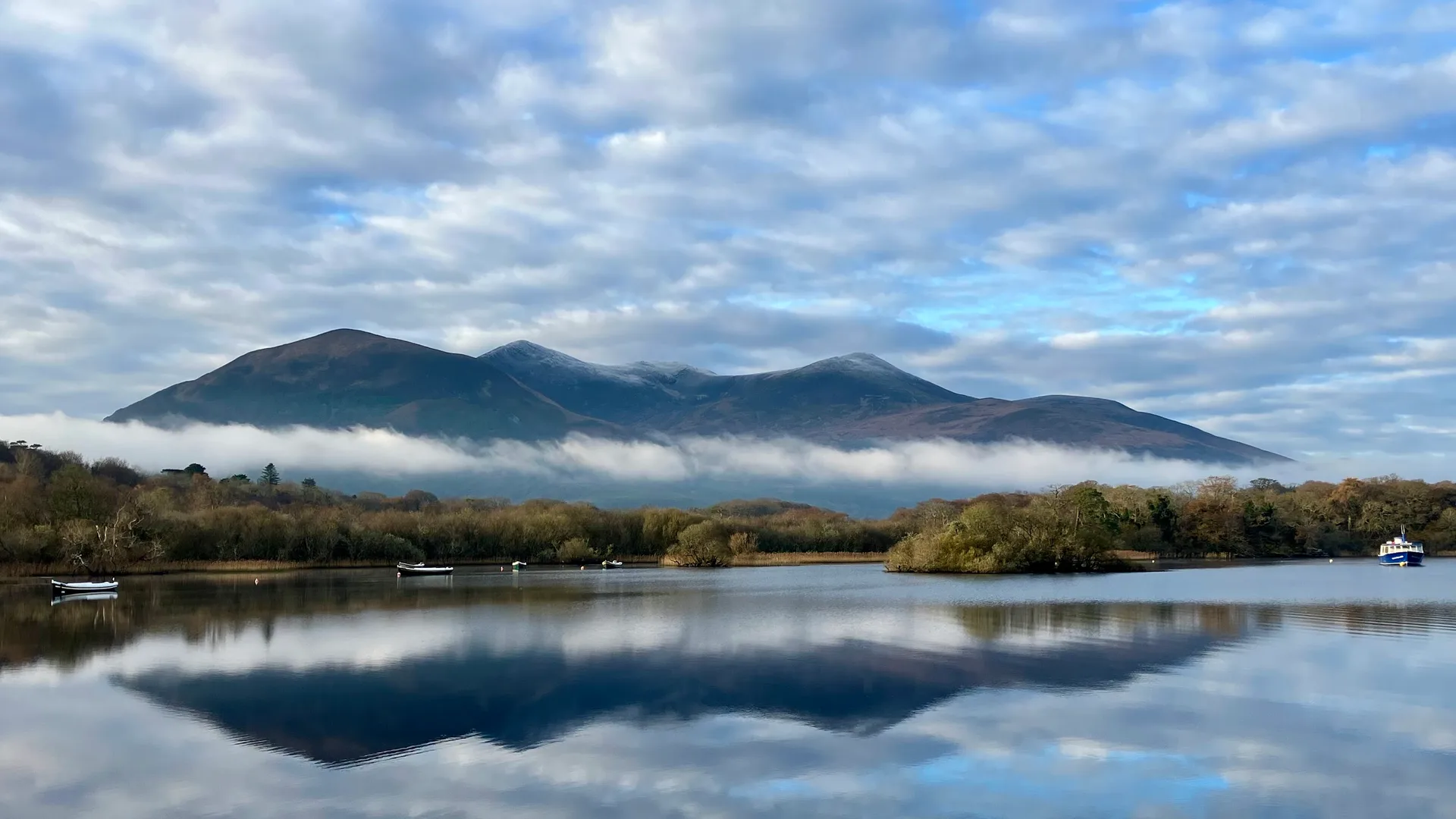
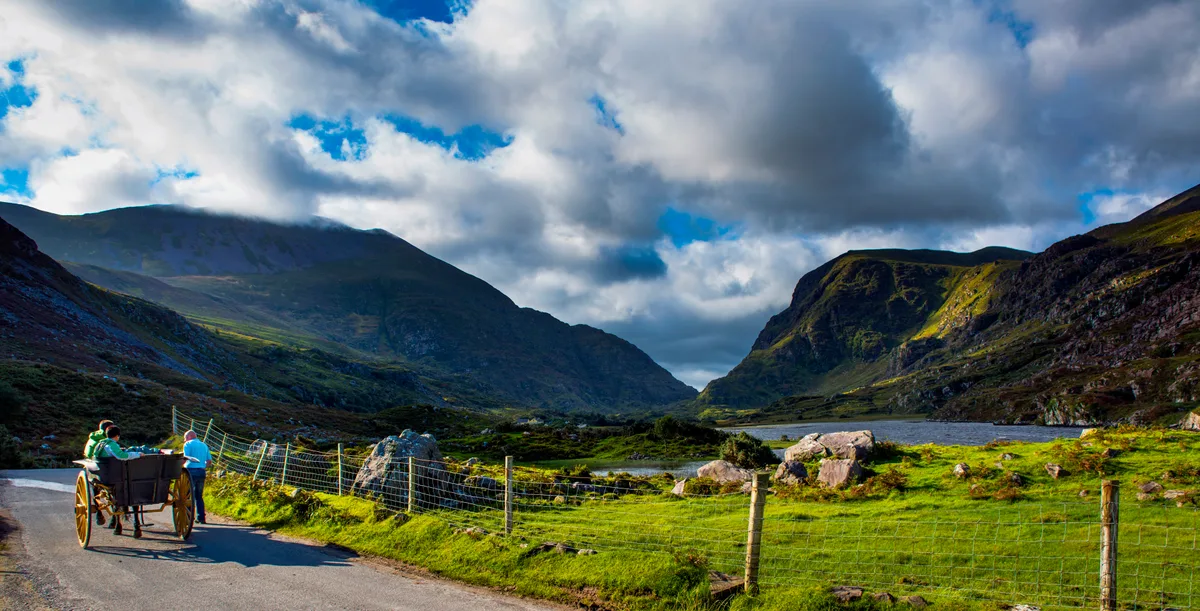
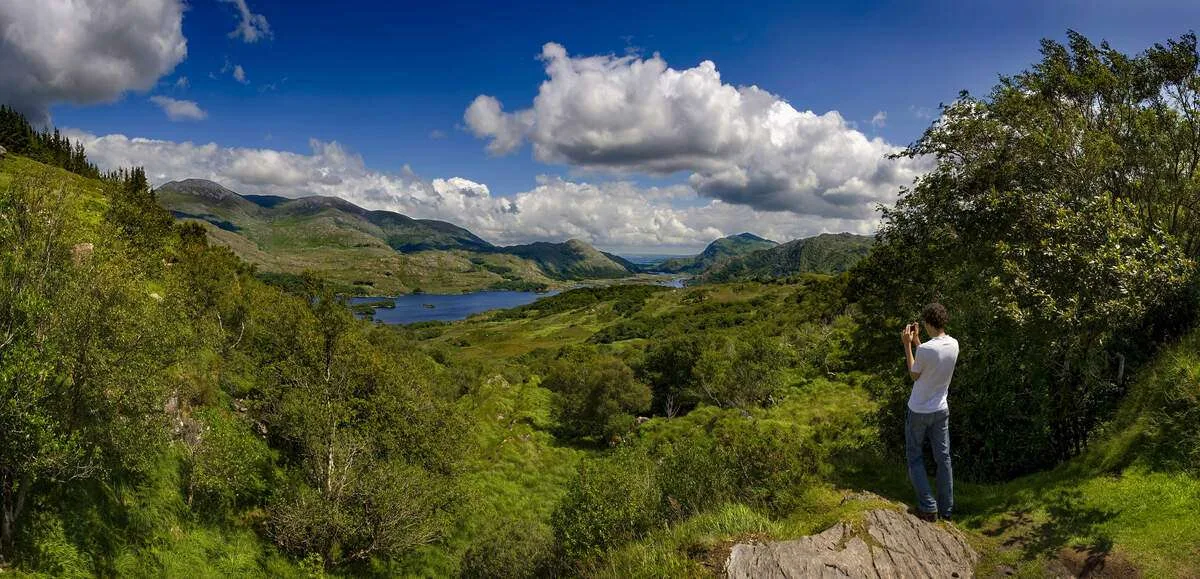
The highest point on the whole trail is lower than many people expect: 383 m, on the Black Valley to Glencar stage, below the MacGillycuddy's Reeks. The Kerry Way is a walk around the mountains, not over the summits.
What makes the Kerry Way harder than the numbers
Wet ground. Bog and wet fields are part of the trail, especially on the mountain stages. Your feet sink with each step, and that's tiring in a way that's hard to train for on pavements. Waterproof boots that are already broken in matter more than any gadget.
Weather. Kerry gets Atlantic weather head-on. Wind on an open pass or a day of steady rain can make a moderate stage feel like a hard one. Pack as if every day will be wet and enjoy it when it isn't.
Consecutive days. No single stage needs exceptional fitness. Walking five, seven or nine days in a row is the real test. Feet and knees tire before lungs do.
Descents. Long downhill stretches are where tired knees complain. Walking poles help a great deal.
Which Kerry Way tour suits your fitness
Tour | Walking days | Daily distances | Includes the hard day? |
|---|---|---|---|
3 | 18–18.8 km | No | |
4 | 18–19.6 km | No | |
5 | 13.5–23.5 km | Yes, last walking day | |
6 | 14.5–23.5 km | Yes, day 3 | |
8 | 14.5–23.5 km | Yes | |
10 (plus a rest day) | 14.5–23.5 km | Yes |
If you're unsure, start shorter. The 5- and 6-day tours cover the inland mountain heart of the Kerry Way and never go above 19.6 km a day. Every version is self-guided: we book your B&Bs, move your luggage every walking day, and give you printed maps plus a route app, so you only carry a daypack.
How to train for the Kerry Way
Give yourself 8 to 12 weeks if you don't already walk regularly. For a full week-by-week plan, see our 12-week training plan for hiking in Ireland. The Kerry Way essentials are:
Walk three times a week. Two shorter walks of 1 to 2 hours and one long walk at the weekend.
Build the long walk to 20 km. Add 2 to 3 km every week or two, on hills wherever you can.
Do back-to-back days. At least twice before you travel, walk 15 to 20 km two days in a row. This tells you more than any single big day.
Train in your Kerry boots and with your daypack. Blisters on day two are the most common thing that spoils a walking holiday, and they're avoidable.
Practise going downhill. If you have no hills nearby, stairs work.
The test is simple. If you can walk your second 20 km day at a steady pace and still enjoy the evening, you're ready.
Frequently asked questions
Is the Kerry Way suitable for beginners?
It suits fit beginners who walk regularly, but it isn't the easiest first long-distance walk in Ireland. If you have never walked several days in a row, choose the 5- or 6-day Kerry Way, or compare it with the Dingle Way.
How many hours a day will I walk on the Kerry Way?
Between about 4¾ and 6¾ hours on most stages, and around 8¼ hours on the Foilduff to Waterville day.
Do I need mountain or navigation experience?
No climbing or scrambling is involved, and the trail is waymarked. You should be comfortable following route notes and a map in open country, especially in low cloud. Our route app shows your position on the trail even without phone signal.
When is the Kerry Way easiest to walk?
Our walking season runs from April to October. May, June and September usually bring the longest dry spells and comfortable temperatures. See our best time to walk the Kerry Way guide.
Not sure which version suits you? Tell us about the walks you've done recently and we'll suggest the Kerry Way that fits. Get in touch. We'd love to help.
Photo Gallery