Guide To Walking Holidays With Your Dog In Ireland
Every few months an email arrives that I hate answering. Someone has found our walking holidays, fallen for the idea, and asks the natural question: can we bring the dog?
The honest answer is that we cannot make it work, and this autumn we finally did the homework to find out whether anyone could. We asked the guesthouses, B&Bs and hotels we work with along two of our routes — the Barrow Way in the south-east and the Antrim Glens and Causeway Coast in the north — whether they would take a dog, on what conditions, and at what charge.
This article is what we learned. If you are searching for dog friendly walking holidays in Ireland, I would rather tell you the truth than sell you something that falls apart on day three. The short version: it is mostly not possible the way you are imagining it — but there is a way to do it, and it is probably not the way you were planning.
What our own guesthouses told us
Only a small handful of the houses we surveyed could take a dog at all — and every one of those was on the Antrim coast. Along the entire Barrow Way, four counties of it, not a single house we work with could say yes.
The refusals were not awkwardness or unfriendliness. Several hosts keep dogs of their own and cannot mix them with guests' dogs. Others mentioned visitors with allergies or a genuine fear of dogs, or simply having no facilities. A few will accept certified guide and assistance dogs, but nothing beyond that.
For a sense of the wider picture: search the whole of Ireland on Booking.com for a typical night and roughly one property in five shows the "Pets allowed" flag — about 500 out of 2,500 available places when we checked. That sounds workable until you meet the detail underneath it.
What "dog friendly" actually means when someone says yes
The yeses are worth reading closely, because they show what dog friendly means in practice. It almost never means the whole house.
Among the houses that told us yes, the pattern was consistent: dogs in a self-contained annexe or a few designated rooms only — never the suites — a charge of around £20 per dog, a cap on how many dogs the house will hold at once, no leaving the dog alone in the room, and in one case guests with dogs taking their meals in a separate lounge rather than the main restaurant.
None of this is unreasonable. It is just narrower than the phrase "dog friendly" suggests. One particular room, or an outbuilding, often with a cap, a surcharge and rules about where you may have your breakfast. If you book without asking the detailed questions, the surprise arrives at check-in.
The bigger problem: are dogs actually allowed on Irish walking trails?
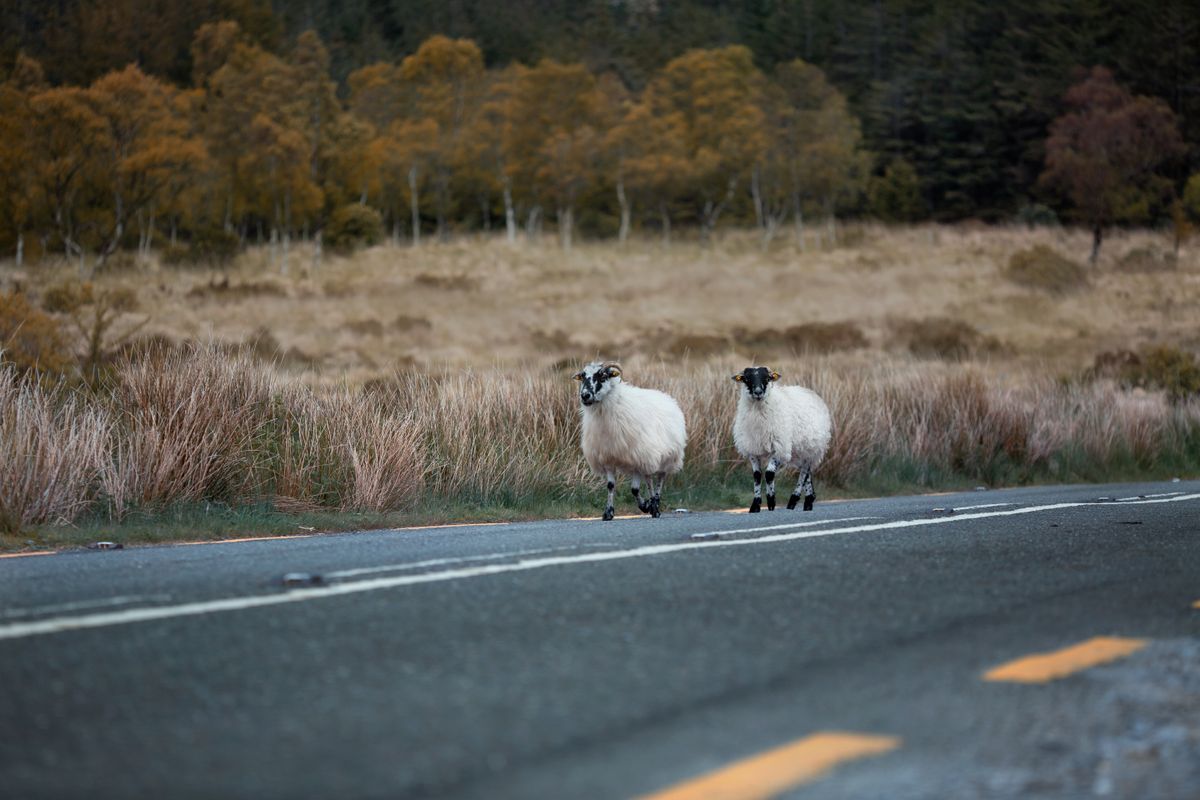
Even if you solve the beds, the trails themselves are the harder half of the problem, and it is the half nobody warns you about.
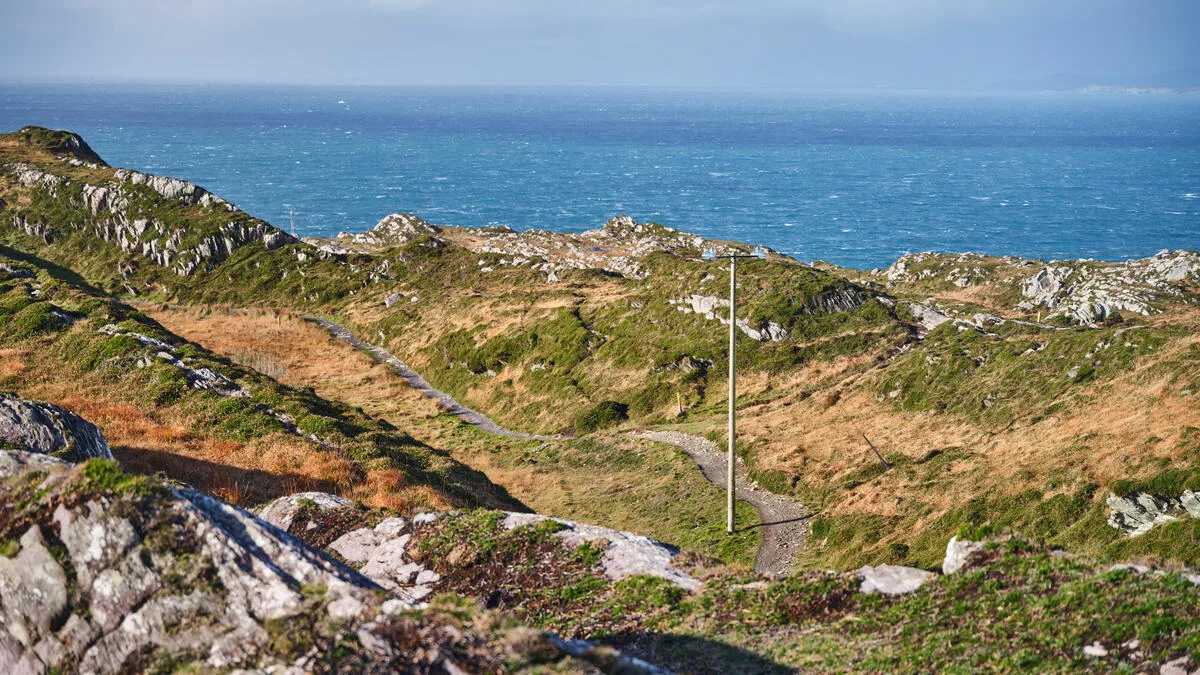
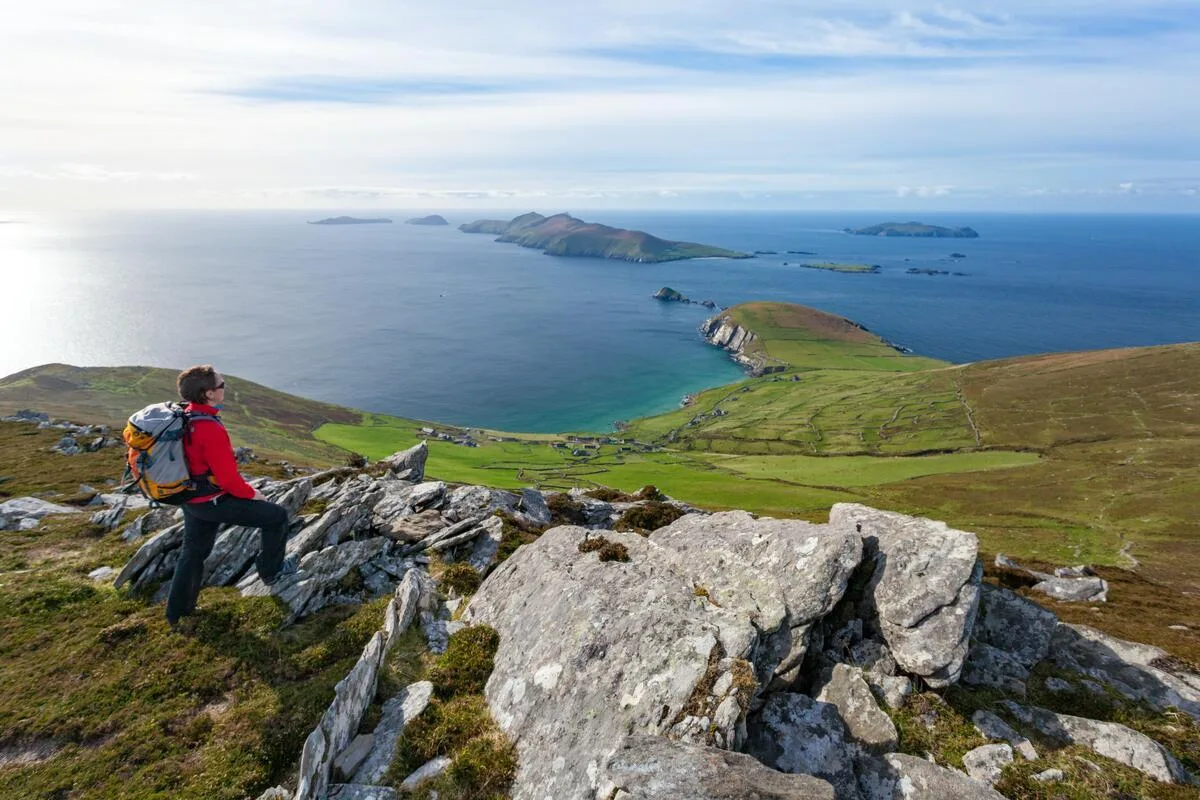
A great deal of Ireland's waymarked walking crosses working farmland, much of it sheep country, and access depends on the goodwill of the farmers whose land it is. Leave No Trace Ireland's guidance is blunt: dogs should only be brought onto hills or farmland with the landowner's permission, and many landowners do not give it. On plenty of Irish trails the polite truth is that your dog is not welcome at all, lead or no lead.
The law adds teeth to this. Under the Control of Dogs Act 1986, if a dog worries livestock — attacks, or simply chases in a way that could injure them — the owner is committing an offence and is liable for the damage. Section 23 of the same Act gives a farmer a legal defence for shooting a dog caught worrying sheep where there is no other way to stop it. That is not a theoretical clause; sheep farmers know it well.
In the National Parks the rule is simpler: dogs are generally welcome but must be kept on a lead at all times. That is the stated position in Killarney National Park — where new bye-laws with fines for off-lead dogs are on the way — and in Wicklow Mountains National Park, including Glendalough. In Coillte's forests, dogs must be under effective control — coming when called — or on a lead.
On the north coast there is a further layer. Causeway Coast & Glens Borough Council operates seasonal dog restrictions from 1 June to 15 September: dogs are prohibited from designated stretches of several beaches the coastal path uses or passes — parts of Portrush's East and West Strands, Castlerock, Downhill and Salmon Rock at Portballintrae — with £80 fixed penalties and fines of up to £1,000. One host had told us she believed dogs were barred from parts of the Causeway Coast route; the truth is more specific than a blanket ban, but in high summer the effect on a walker is much the same: a route that works for four days can be closed to your dog on the fifth.
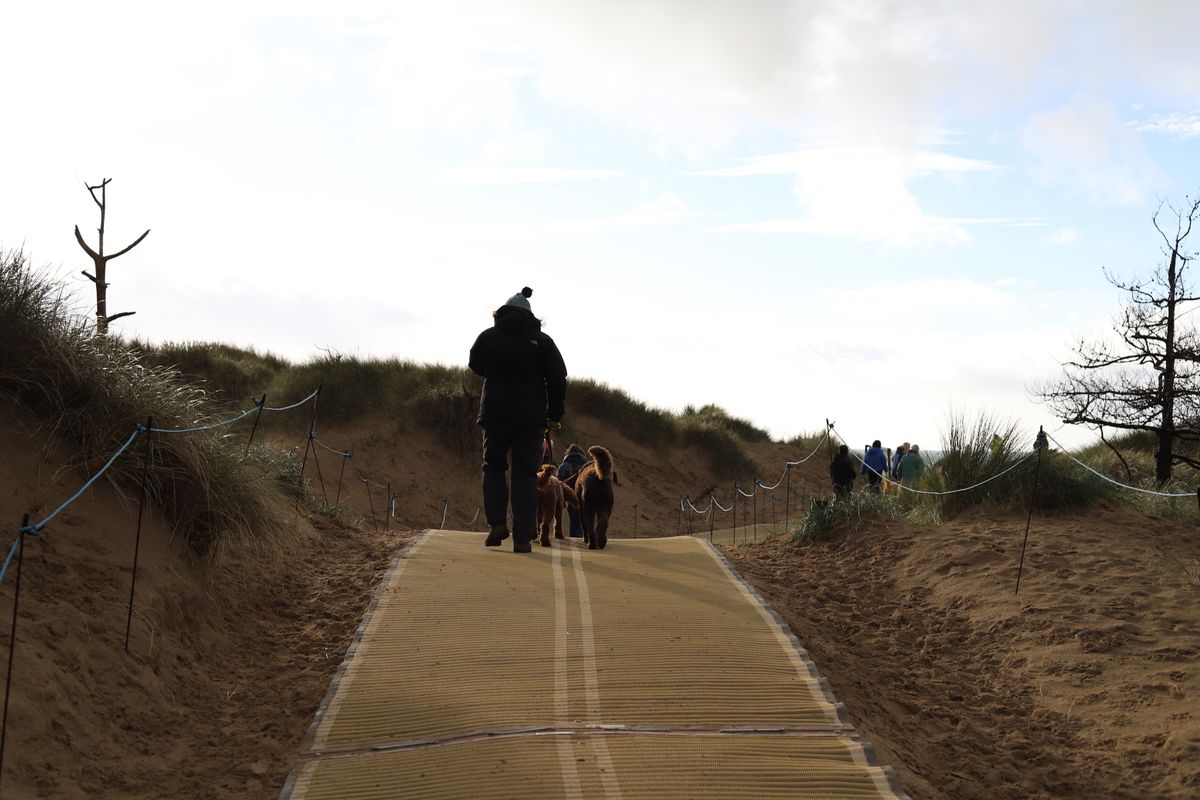
And the famous sights themselves? Better than you might fear. The Giant's Causeway welcomes dogs on leads everywhere, including the visitor centre and café. At Carrick-a-Rede, dogs on leads can walk the coastal path — they just cannot cross the rope bridge.
Where dogs genuinely are welcome
There is a pattern in all of the above, and once you see it the planning gets easier: the trouble is farmland and summer beaches; the welcome is on greenways and towpaths.
Greenways are traffic-free, mostly level, fenced from the fields around them and almost never cross livestock ground — which is exactly why they are the one category of Irish trail that is officially, unambiguously happy to see your dog. The Waterford Greenway — 46km from Waterford city to Dungarvan — welcomes dogs on leads, and County Waterford now actively promotes itself as Ireland's most dog-friendly destination. Canal and river towpaths work the same way: the Barrow towpath itself is level, waymarked and walkable with a dog on a lead for day after day.
Which is the strange irony of what we found. On the Barrow Way the trail would suit a dog beautifully — it was the beds that failed. On the Causeway Coast we found the only beds — and it is the trail that gets complicated in summer. Nowhere did both halves line up. That, in one sentence, is why we do not sell a dog-friendly walking holiday.
How to plan it yourself: beds first, then the walking
If you take one thing from this page, take this, because it is the opposite of how everyone plans a walking trip:
Build the trip around the beds, not the trail. On a normal walking holiday you pick the route, then find somewhere to sleep. With a dog you must do it backwards: find the handful of places that will genuinely take you both, then work out what walking is possible from their door. The accommodation is the binding constraint. The scenery is negotiable; the bed is not.
The tactics that follow from that:
- Use fewer bases. Two or three basecamps with day walks out and back beats a different bed every night. Less packing, less upheaval for the dog, and you only need to find two dog-friendly houses instead of seven. This came from a customer planning his own trip, and it was the smartest idea in his email.
- Favour self-catering. Cottages and apartments are far more relaxed about dogs than a guesthouse with a shared breakfast room — this is where most of Ireland's genuine dog-friendly capacity sits.
- Filter, then ring. Booking.com's "Pets allowed" filter (under Facilities) finds candidates, but it is unreliable at the detail level — "pets allowed" can mean one room, a size limit or a surcharge. Read the house rules, then telephone. When we emailed our own partner houses, most messages went unanswered and several addresses no longer worked. Small Irish houses answer the phone.
- Search Google Maps in plain language — "dog friendly B&B Carlow", "dog friendly guesthouse Bushmills" — and read the reviews, which reveal more than the listings do.
- Check dog access day by day, not trail by trail. Restrictions apply section by section — a farmland stretch here, a summer beach there. Walk the route on the map with the dog in mind before you commit to anything.
Getting your dog here, and the everyday admin
Almost everyone doing this brings the dog by ferry from Britain or is already on the island. If you are coming from Great Britain to Ireland, your dog needs a microchip, a rabies vaccination given at least 21 days before travel, and an Animal Health Certificate issued by a vet within ten days of each trip — typically £100–£200, and there are vets near the Holyhead and Pembroke terminals who specialise in doing it on the day. Northern Ireland uses a simpler pet travel document scheme from Great Britain. Ferry policies vary between leaving the dog in the car, kennels on board and pet-friendly cabins, so check when you book the crossing rather than at the ramp.
Day to day: carry water and a bowl on every walk, because long stretches of Irish trail have none. Check paws after stony coastal sections. Check the dog for ticks each evening the same way you check yourself — our guide to ticks in Ireland applies to dogs as much as to walkers. And be ready for the pub question to go either way: some Irish pubs will feed your dog sausages by the fire, others will point at the door, and there is no reliable way to know which from the outside.
Where that leaves us — and you
We looked hard at offering a dog-friendly walking holiday, and what we found told us not to: only a handful of houses, all on one route, each with its own careful conditions, on a coast where the beaches close to dogs for the exact months people want to walk. We could sell that trip. It would not survive contact with reality, and you and your dog would be the ones finding that out mid-week.
So we would rather tell you the truth: we do not offer walking holidays with dogs, and I do not see that changing until the beds change. If you are planning a dog trip yourself, everything above is yours to use, and I genuinely hope it saves you a few of the dead ends we hit. And if the dog is staying with your sister this year — we would be very glad to plan the walking.