Historical Sites To Visit On Your Irish Hiking Journey
Walking gives you a different view of Ireland than driving ever will. You arrive at historical sites Irish hiking trails connect — round towers, ring forts, monastic cities, famine villages — the same way pilgrims and farmers did, on foot. This is my pick of the historic places worth building a hiking trip around, drawn from years of walking these trails myself and putting them on the itinerary for our guests.
Must-Visit Historical Sites for Your Irish Hiking Journey
Five sites I'd put on a first-time hiker's must-do list. All accessible on foot, all worth the time.
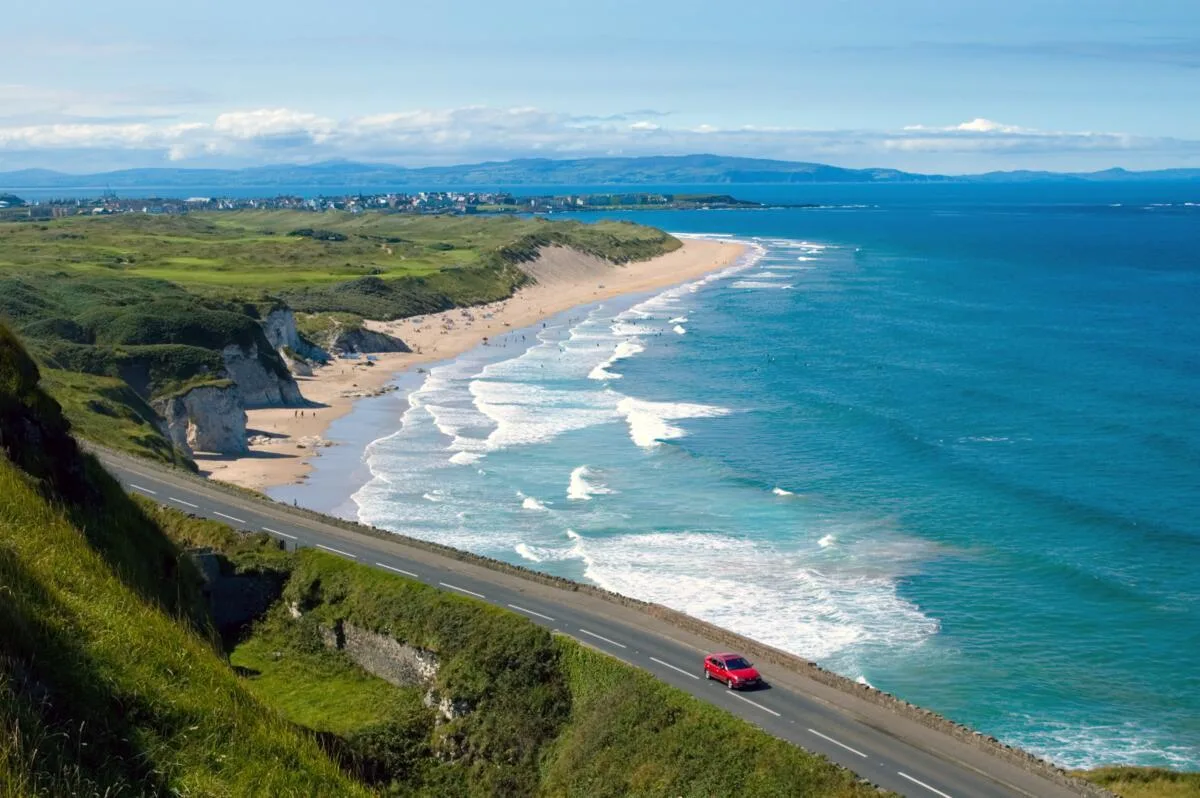
Giant's Causeway, County Antrim
The 40,000 basalt columns at the Giant's Causeway formed about 60 million years ago when a lava flow cooled and cracked. The hike to reach them on foot — rather than the tourist coach — is the cliff path from Dunseverick or the longer Causeway Coast Way from Ballycastle. You arrive in from above, along the Shepherd's Steps, and the columns appear at your feet. See our Giant's Causeway walking guide for the full route.
The Derry Walls, Northern Ireland
Built between 1613 and 1619, the walls of Derry are the only complete city walls remaining in Ireland. The walk around the top is about 1.5 km and takes around an hour with stops. You'll pass cannon, gates, and bastions, with views into the Bogside and across to Donegal. A different kind of hike — urban, level, and dense with history.
Clonmacnoise, County Offaly
Founded by St Ciarán in 544, Clonmacnoise sat at the crossroads of the Shannon and the Esker Riada — the old east-west road across Ireland. The site has two round towers, three high crosses (the originals are in the visitor centre, replicas on the ground), nine churches, and over 700 early Christian gravestones. Walking is gentle along the riverbank. It's quieter than Glendalough and arguably more atmospheric.
Rock of Cashel, County Tipperary
The Rock rises 60 metres out of the flat plain of the Golden Vale and you can see it from twenty miles away. The site holds a 12th-century round tower, the Romanesque Cormac's Chapel with rare wall paintings, and the Gothic cathedral. Walk in from the town below — about 1 km uphill — for the best approach. Plan two hours on site.
Hill of Tara, County Meath
The seat of the High Kings of Ireland for over a thousand years. The walking is light — a 2 km loop through the Royal Enclosure, the Mound of the Hostages (a passage tomb older than the pyramids), and the Lia Fáil standing stone. On a clear day the view stretches across nine counties. Pair it with Newgrange for a full day of historical sites Irish hiking ground delivers near Dublin.
Guided Walking Holidays in Ireland
If you want company on the trail and someone to handle the logistics, guided and self-guided walking holidays are the way. We run multi-day routes that link several historical sites Irish hiking ground holds — Glendalough, the Spinc, monastic city ruins, ring forts. Have a look at our 8-day Wicklow Way walking tour for a deep dive into east-coast history, or our best hiking trails in Ireland for 2026 guide for a fuller list.
Other Notable Historical Sites Worth a Walk
Leap Castle, County Offaly
Reputedly the most haunted castle in Ireland, Leap has stood for over 700 years. The grounds include short walking paths and the castle itself runs guided tours. The 'oubliette' — a hidden dungeon below the chapel — is genuinely grim. Combine with a longer walk in the Slieve Bloom Mountains nearby.
Dunbrody Famine Ship, County Wexford
A working replica of a 1840s emigrant ship moored at New Ross. Boarding it gives you a real sense of what Irish emigrants endured on the seven-week crossing to North America. Walk the riverside path here and continue out to Hook Lighthouse, the oldest working lighthouse in the world.
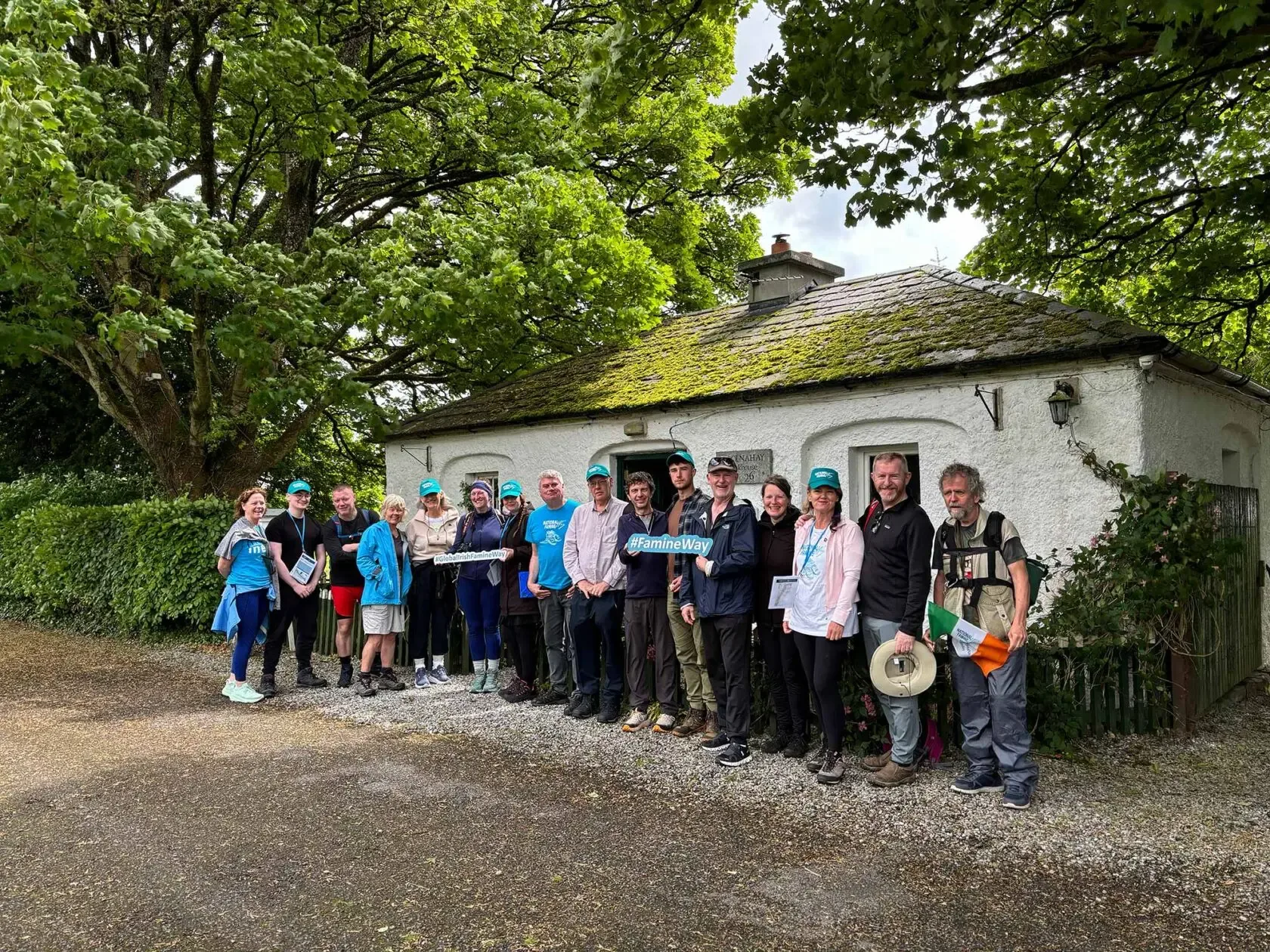
For the other end of that story, the National Famine Way follows 1,490 emigrants on foot from Strokestown to the Dublin quays, where the Famine Memorial and the Jeanie Johnston stand today.
Céide Fields, County Mayo
The oldest known field system in the world — a 6,000-year-old Stone Age farming landscape under the bog at the edge of the Atlantic. The visitor centre explains how you read a landscape that no longer exists above ground. Walk the cliff paths from the centre for views down to the Stags of Broadhaven.
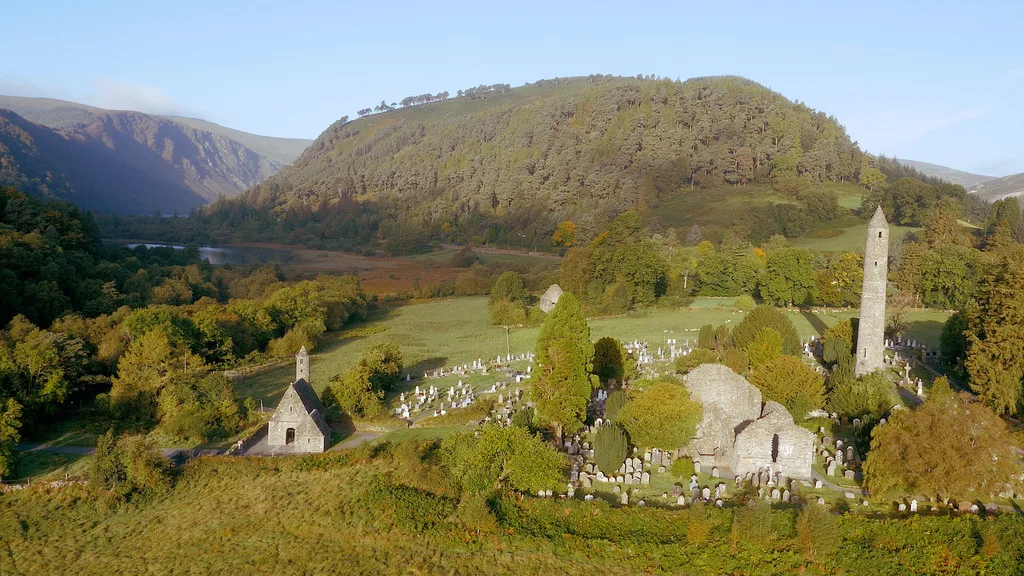
Glendalough, County Wicklow
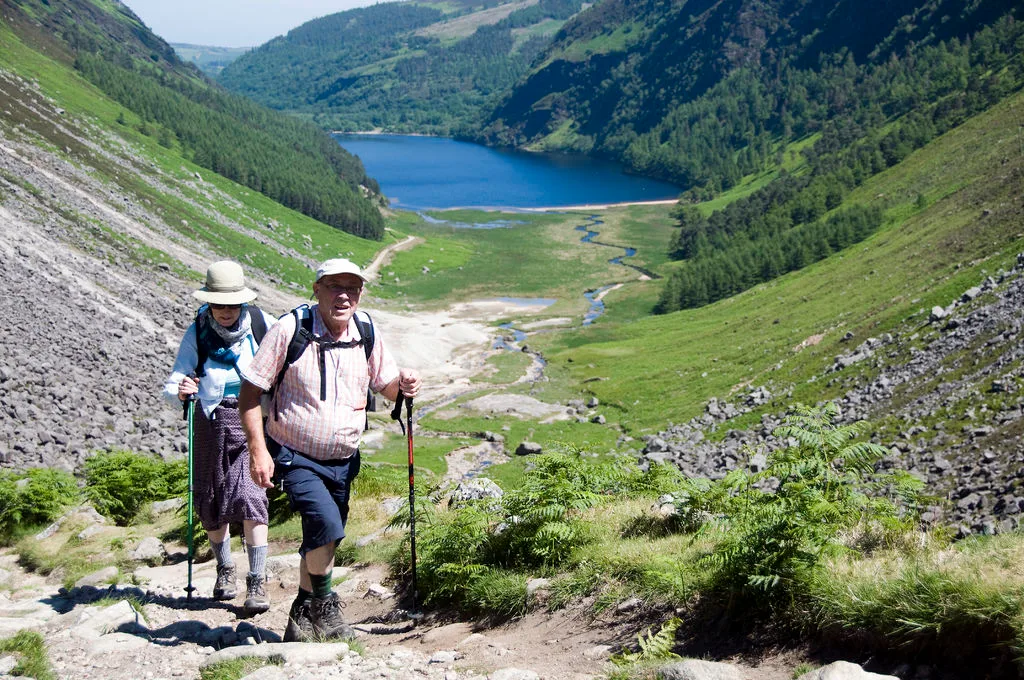
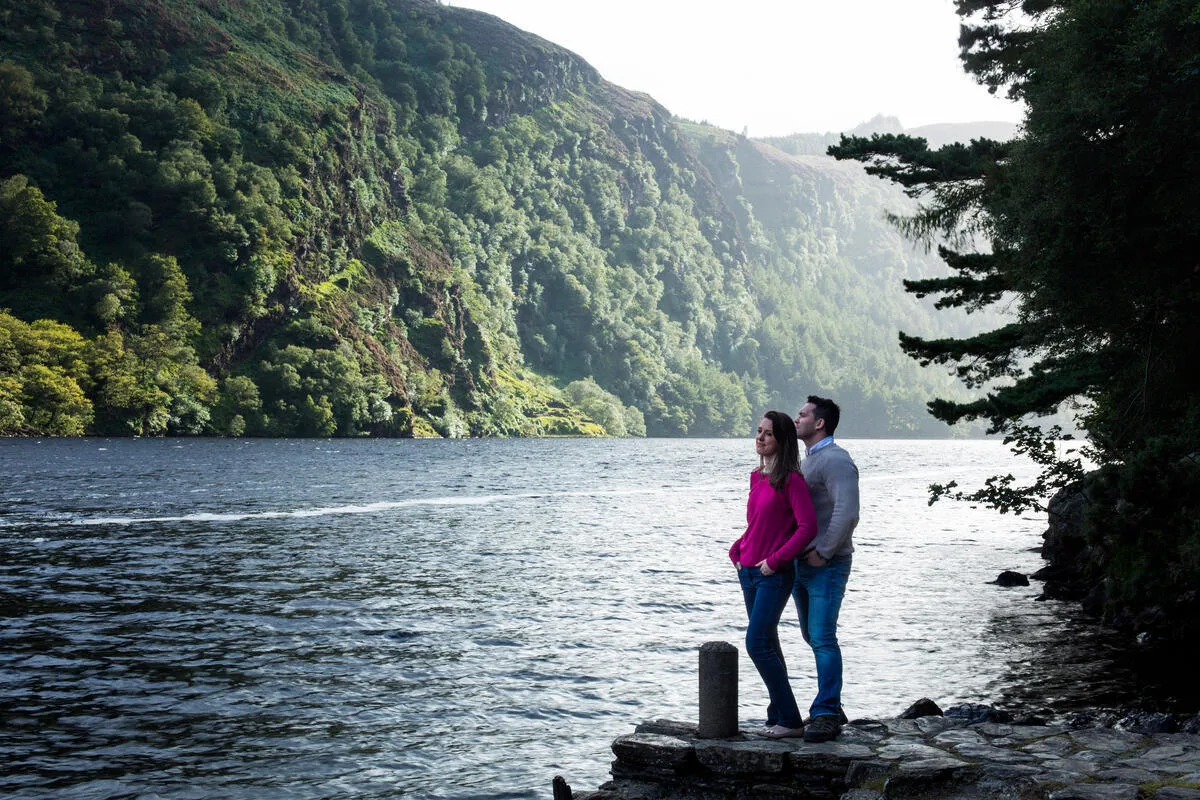
St Kevin founded his monastic settlement here in the 6th century. The round tower has been standing for a thousand years. The Spinc walk above the upper lake is one of the great half-day hikes in Ireland — about 9 km and 410 m of climb. Most people combine it with a wander around the monastic city.
General Post Office, Dublin
The GPO on O'Connell Street was the headquarters of the 1916 Easter Rising. The bullet holes are still visible in the columns out front. The on-site museum, GPO Witness History, walks you through the Rising hour by hour. A city walk rather than a country one, but essential for anyone interested in modern Irish history.
Historic National Parks for Walking
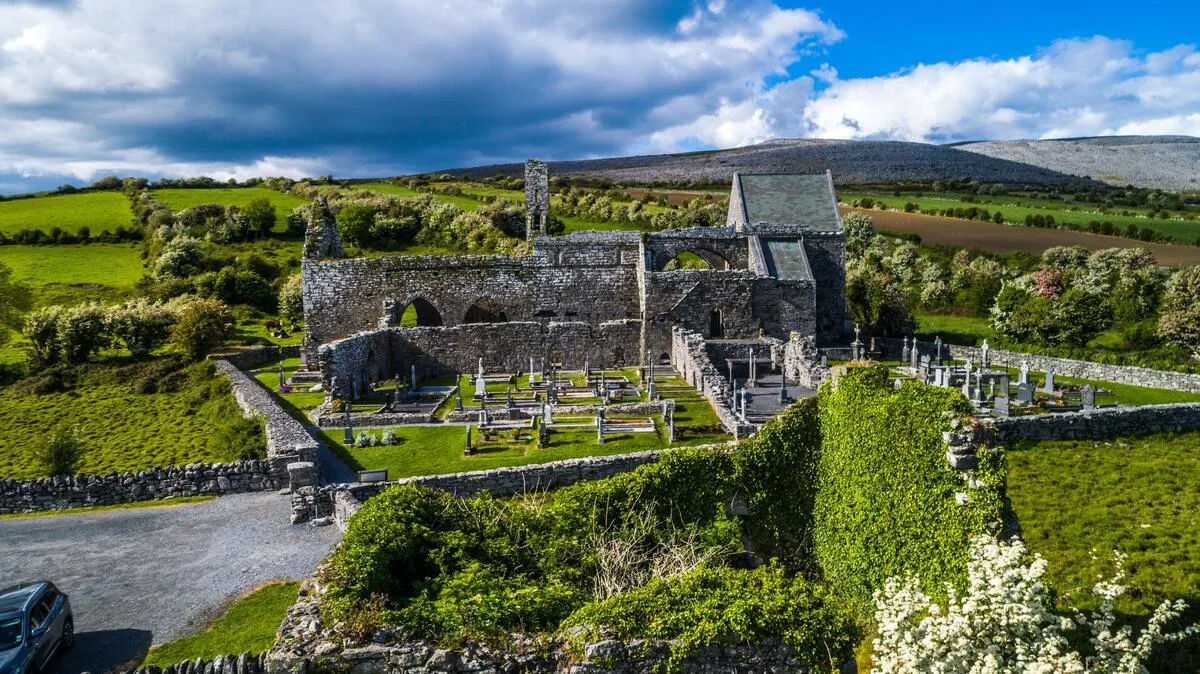
The Burren, County Clare
1,800 hectares of limestone karst. Geologically fascinating, archaeologically dense — wedge tombs, ring forts, the Poulnabrone dolmen all lie within or just outside the park boundary. Walking is easy on the limestone pavement but you need to watch your ankles between the cracks.
Skellig Michael, County Kerry
The 6th-century monastic settlement on Skellig Michael is a UNESCO World Heritage Site. You can only reach it by boat from Portmagee between May and September, and the climb up the 600 steep steps cut into the rock is not for vertigo sufferers. Worth every cent of the boat fare.
Carrowmore, County Sligo
The largest megalithic cemetery in Ireland — 30 surviving tombs in a small area, dating from 5,500 years ago. Walking is flat and easy. Pair it with a climb up Knocknarea (Queen Maeve's cairn) for a full day of prehistoric hiking.
Drombeg Stone Circle, County Cork
A 17-stone Bronze Age circle aligned to the winter solstice sunset, beautifully sited on a hilltop above the sea. Short walk in from the road. The associated cooking pit — a fulacht fiadh — is one of the best preserved in the country.
Ardmore, County Waterford
The Ardmore Cliff Walk is a 4 km loop linking St Declan's Monastery, the round tower (one of the most complete in Ireland), and the dramatic coastal cliffs. Founded in the 5th century, Ardmore is one of the oldest Christian sites in the country.
Conclusion
The historical sites Irish hiking trails connect aren't museums you walk past on the way to lunch. They're places you reach with your own legs, the way they were always reached. Pick one or two as anchors for a trip, plan walking days that include them, and you'll come back with a sense of Ireland that no bus tour can give you.
FAQs
Are the historical sites on an Irish hiking journey easy to reach?
Most are accessible on foot from a nearby trailhead or village. Skellig Michael needs a boat. Some, like Tara and the Burren ring forts, are minutes from a car park. Others — like Mount Brandon's pilgrim path — need a full hill day.
Do these historical sites charge admission?
Many are free (Tara, Drombeg, the Derry walls). Others charge a modest OPW fee — typically €5 to €10 for adults. The Heritage Card from the OPW pays for itself in a week.
How long should I plan for each site?
Plan one to two hours per site, plus walking time to and from. Glendalough and the Burren can easily fill a full day each.
Can I take photos at the sites?
Yes at almost all of them. A few interiors (the Cormac's Chapel paintings at Cashel, for example) restrict flash photography. Check signs on entry.
Do I need a guide?
Not essential, but a good guide adds a lot. OPW guides at the major sites are excellent and the tours are usually included in the admission. For multi-day walking, supported tour operators handle the route, the bookings, and the context for you.
Photo Gallery