Famine Memorial Dublin: Where the National Famine Way Ends
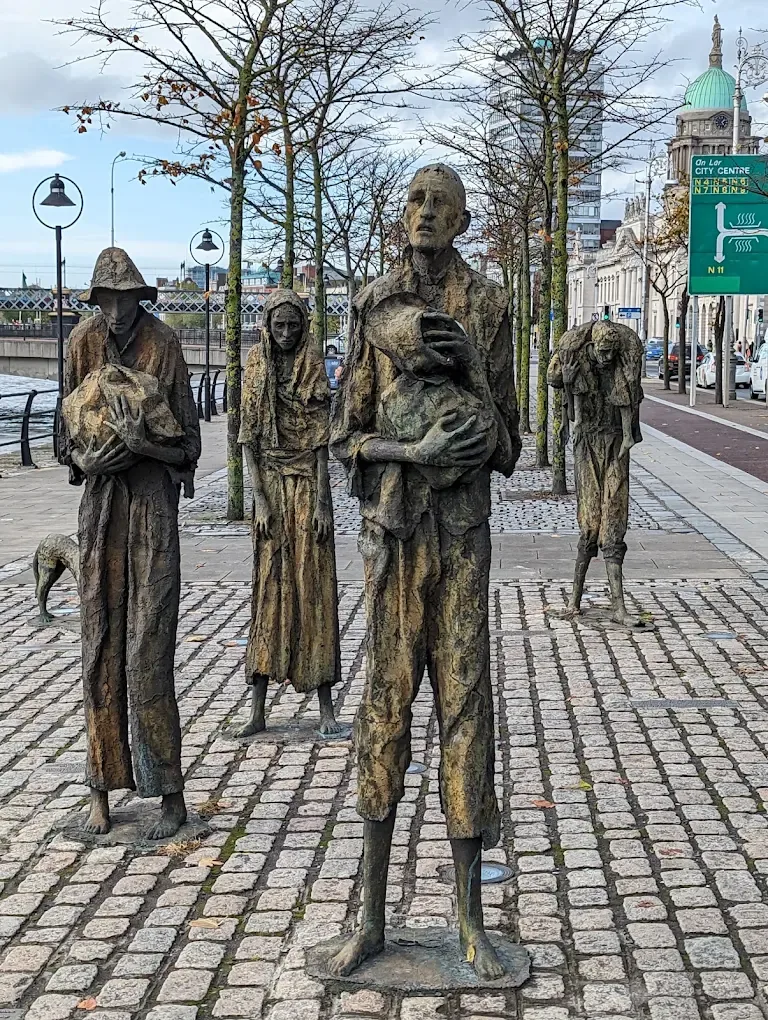
On Custom House Quay in Dublin, six thin bronze figures shuffle towards the water. They clutch bundles to their chests. A dog follows behind. Thousands of people walk past them every day on their way to work.
This is the Famine Memorial in Dublin, and it is also the end of a much longer story. The figures stand at the finish line of the National Famine Way, a 165 km walk that starts in Strokestown, County Roscommon. In 1847, 1,490 people walked that route to this very quay. Here is what to see when you reach it, and why it means more when you arrive on foot.
The Famine Memorial Dublin visitors walk past
The sculptures are by the Irish artist Rowan Gillespie. They were given to the city in 1997, 150 years after the worst year of the Great Famine, known in Ireland as Black '47.
The figures are thin to the point of pain. Their clothes hang off them. Some hold what little they own. They are walking towards the ships, because this stretch of the Liffey was where emigrants left Dublin.
Most people treat the Famine Memorial Dublin keeps on its quays as a quick photo stop. Spend five quiet minutes with it instead. Look at the faces. Then look down the river, the way they are looking.
The other half of the sculpture is in Toronto
Gillespie made a second set of figures called Arrival. It was unveiled in Toronto in 2007, in Ireland Park on the city's waterfront. One group leaves Dublin. The other group lands in Canada.
That matters for this walk. The Strokestown emigrants of 1847 were bound for Canada too. They sailed from Liverpool to Quebec, and many of the survivors settled in Ontario. So the two sets of statues bookend their journey.
The Jeanie Johnston, a famine ship you can board
Moored a short walk along the quay is a three masted sailing ship. This is the Jeanie Johnston, a replica of a real famine emigrant ship.
The original was built in Quebec in 1847. Between 1848 and 1855 she made 16 voyages to North America, sailing to Quebec, Baltimore and New York. Her biggest load was 254 passengers.
Here is the remarkable part. No passenger or crew member is recorded as dying on board. Historians credit her captain, who did not overload the ship, and the doctor who sailed with them. On the famous "coffin ships" of the time, death rates were often terrible. The Jeanie Johnston shows how different it could have been.
The replica was built in Tralee, County Kerry, and finished in 2002. Today she is a museum ship with guided tours below deck. Check tour times before you go.
EPIC, the official finish of the trail
Right beside the statues, in the old CHQ building, is EPIC The Irish Emigration Museum. It tells the story of the ten million people who have left Ireland over the centuries.
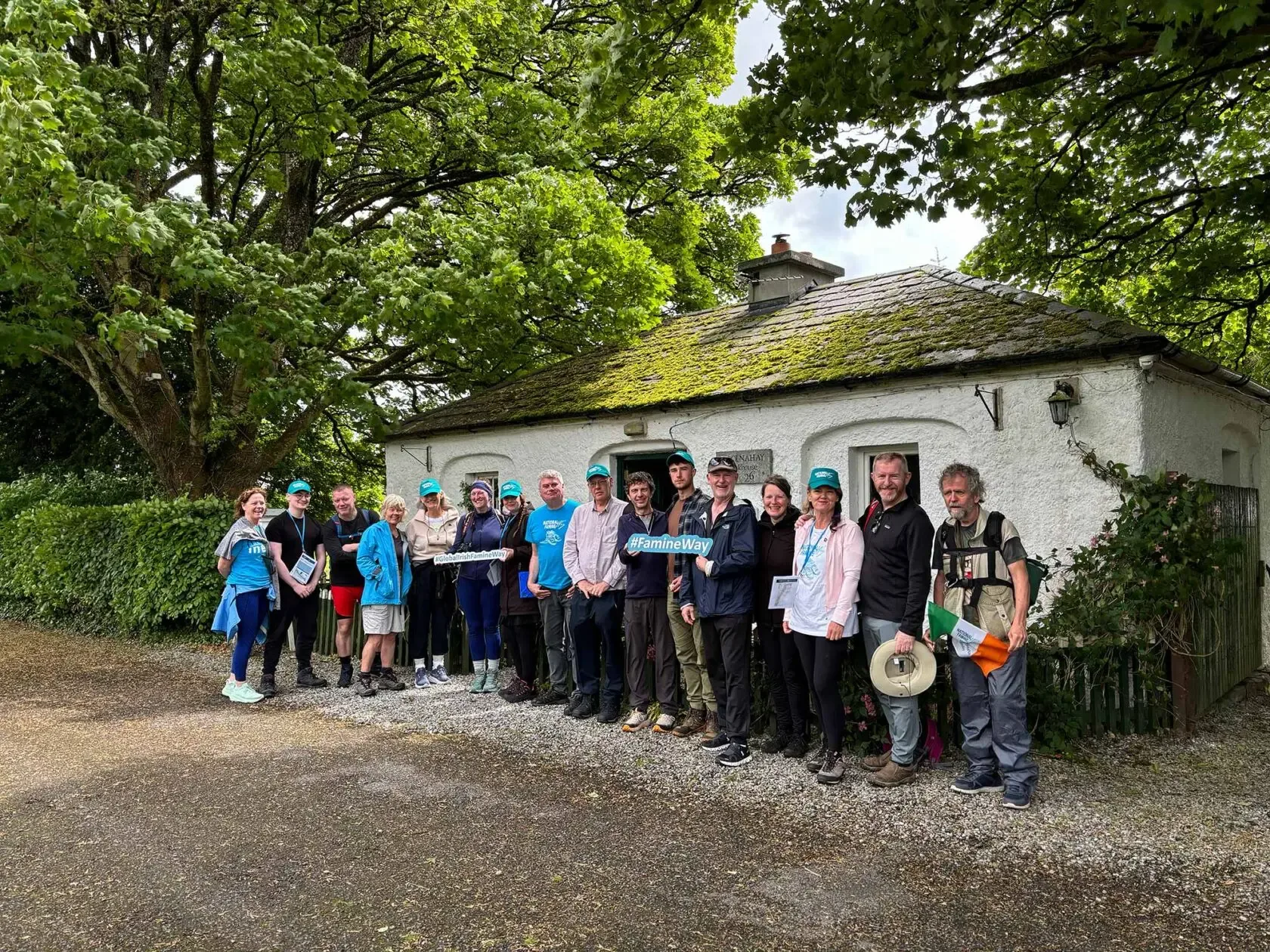
For walkers, it has a special role. EPIC is the official finish of the National Famine Way. If you have carried the Famine Way Passport and collected your stamps, this is where you receive your certificate of completion.
So your last steps go like this. Walk in along the canal. Turn down to the quays. Stand for a moment at the Famine Memorial Dublin raised for the emigrants. Then walk the last few metres into EPIC and finish.
The last bronze shoes in the city
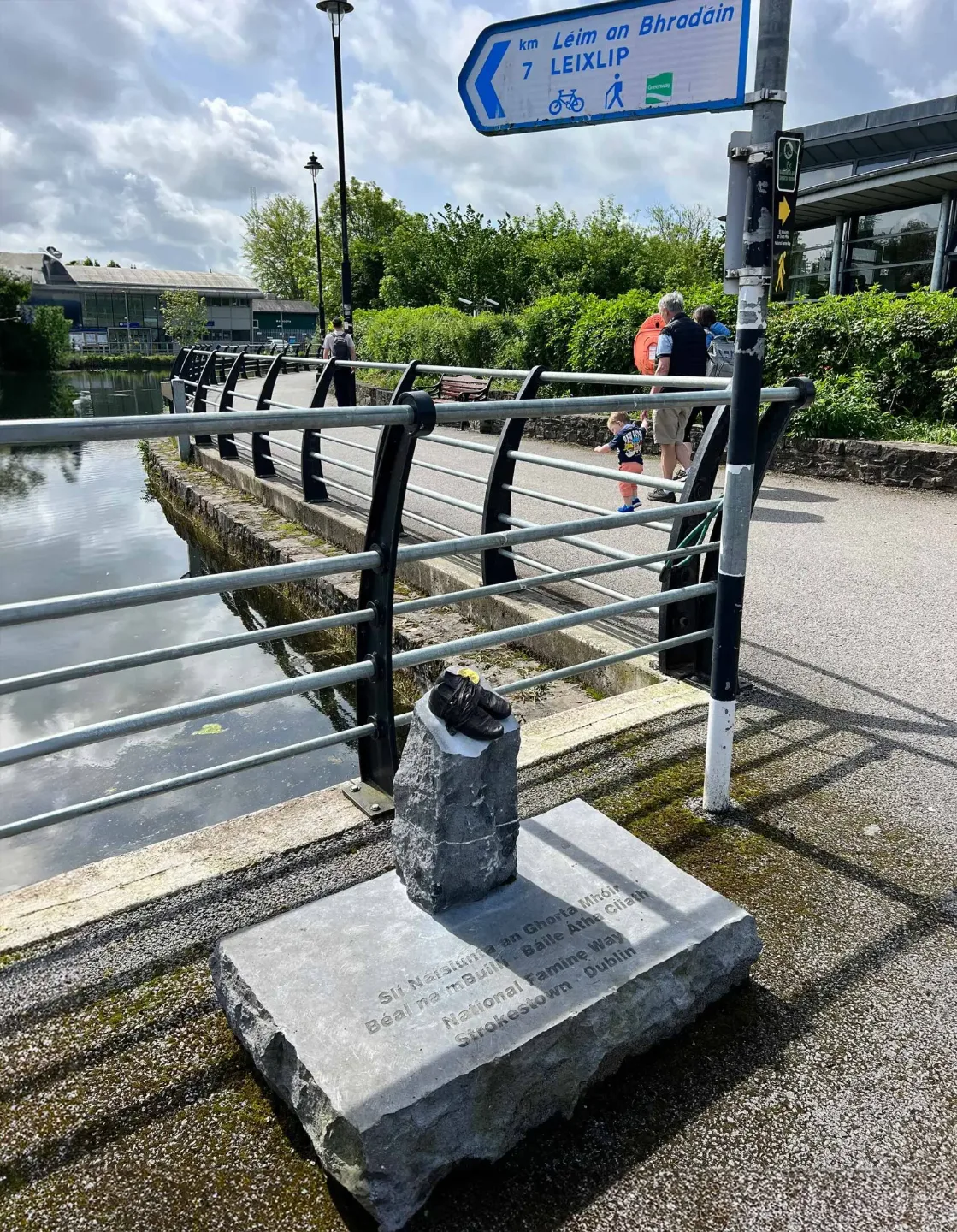
The National Famine Way is marked by over 30 pairs of bronze children's shoes. Each pair tells part of the story of Daniel Tighe, a twelve year old who walked this route in 1847. Some of the last pairs are in Dublin itself, where the canal reaches the city at the 5th Lock in Glasnevin.
Look out for them on your final day. You can read Daniel's full story in our post on the National Famine Way shoe stories.
Why the Famine Memorial means more on foot
You can take a taxi to the quays and see all of this in an hour. Many visitors do. But it lands differently after a week on the towpath.
By the time you reach Dublin, you have walked past the same harbours and locks the families passed. You have crossed the bogs of Longford and the farmland of Westmeath. You have passed the shoes, one pair after another. When you finally stand beside the Famine Memorial, you know exactly how far those figures have come.
The final day into the city is a long, level walk along the canal. On our holidays it runs from Maynooth through Leixlip, Clonsilla and Ashtown, then down to the quays.
Famine Memorial Dublin: planning your visit
- Give it a morning. The statues, the Jeanie Johnston and EPIC are within a few minutes of each other. A morning covers all three.
- Stay an extra night. After the last day's walk, you will be glad of a slow breakfast before you see the museums.
- Check times first. The Jeanie Johnston tours are guided and run at set times, so look them up before your last day.
- Bring your passport booklet. You need it at EPIC for your certificate.
Walk the whole way to the quay
If you only have a few days, our 6 day walk from Mullingar to Dublin covers the eastern half of the trail and finishes right here, at the Famine Memorial Dublin walkers have been heading for since 1847. If you want the full journey from Strokestown, our 10 day National Famine Way holiday walks every step at a steady pace.
We book your rooms, move your bags and send you the route on an app. You just walk. See all the options on our National Famine Way page, or find out what happens on day one at Strokestown Park.
Frequently asked questions
Where is the Famine Memorial in Dublin?
The Famine Memorial is on Custom House Quay, on the north bank of the River Liffey in Dublin's Docklands. The Jeanie Johnston ship and EPIC The Irish Emigration Museum are a few minutes' walk away.
Who made the Famine statues in Dublin?
The Irish sculptor Rowan Gillespie made them. They were presented to the city in 1997. His companion piece, Arrival, stands in Ireland Park in Toronto and was unveiled in 2007.
Is the Famine Memorial the end of the National Famine Way?
The trail ends on the Dublin quays beside the Famine Memorial. The official finish is EPIC The Irish Emigration Museum next door, where walkers who carry the Famine Way Passport receive their certificate.
Did anyone die on the Jeanie Johnston?
No passenger or crew death was recorded on the original Jeanie Johnston across 16 voyages between 1848 and 1855. The replica in Dublin is now a museum ship.