National Famine Way Shoe Stories: Daniel Tighe and the Bronze Shoes
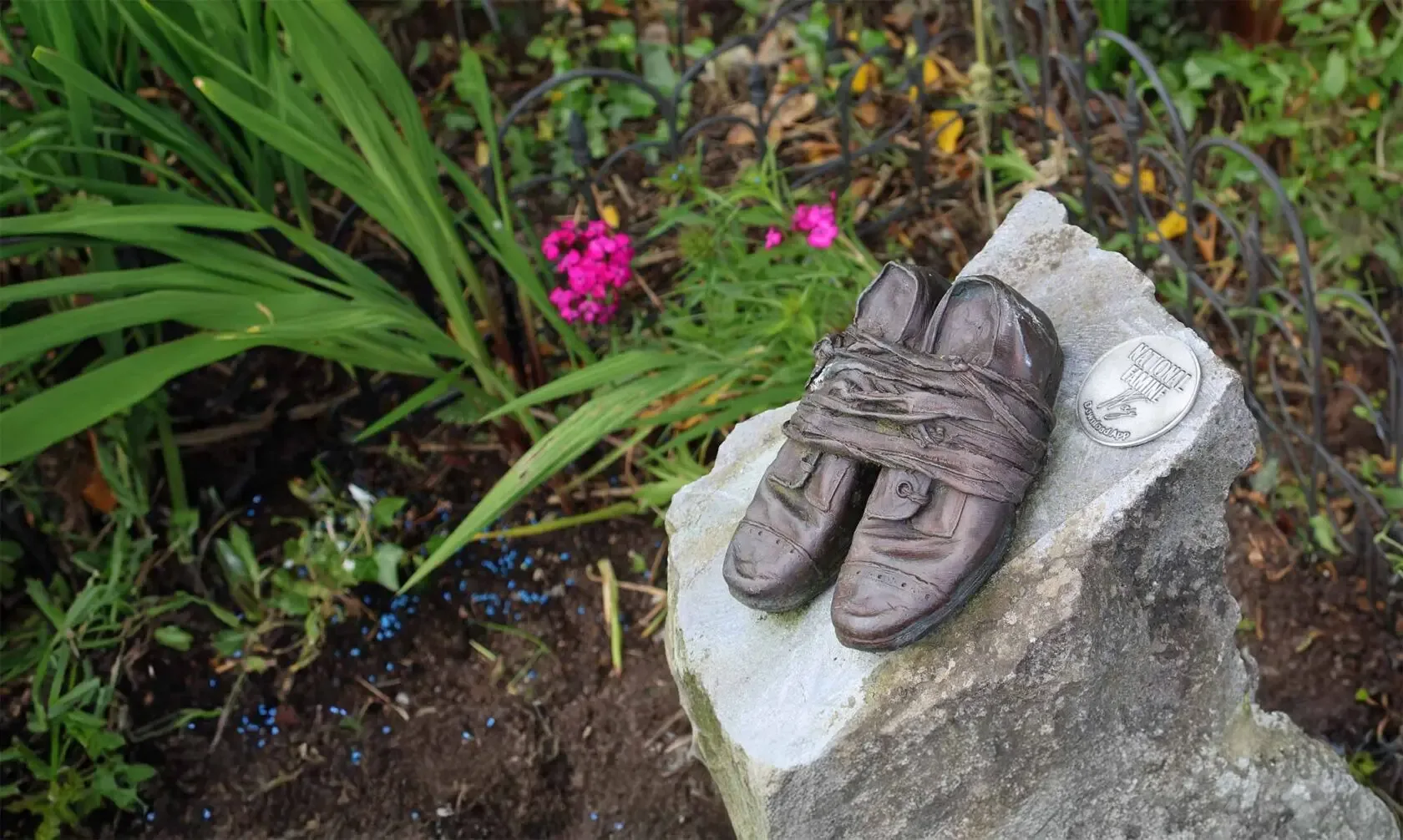
Somewhere along the Royal Canal, a pair of small bronze shoes sits beside the towpath. A cyclist rolls past. A buggy rolls past. Most people do not stop. But if you do, you are standing in the story of a boy called Daniel Tighe, and of 1,490 people who walked this way in 1847.
These are the National Famine Way shoe stories. There are over 30 pairs of these shoes along the trail, from Strokestown in County Roscommon to the Dublin quays. Each one marks a step in Daniel's journey. This guide tells you who he was, where the shoes came from, and how to find them on foot.
The shoes in the roof
The story starts with a real pair of shoes. A local farmer found them in the roof of a ruined 19th century cottage near Strokestown. They were small, worn and bound, the way a poor family would mend shoes to make them last. Nobody knows who wore them.
The farmer gave them to the National Famine Museum at Strokestown Park. They became the symbol of the whole trail. The binding stands for the hardship the emigrants carried with them. It also stands for the ties they kept to the place they left.
About two thirds of the 1,490 people who left Strokestown in 1847 were children. That is why the shoes are a child's size.
Who was Daniel Tighe?
Daniel was twelve years old in May 1847. His mother, Mary Tighe, was a widow on the Mahon estate at Strokestown. The landlord, Major Denis Mahon, offered to pay the passage of tenants who would leave for Canada. Mary took the offer.
So Daniel walked. He walked with his family and hundreds of neighbours, about 165 km from Strokestown to Dublin. Most of that road ran beside the Royal Canal. In Dublin they boarded a boat for Liverpool. From Liverpool they sailed for Quebec.
The voyage on the Naomi
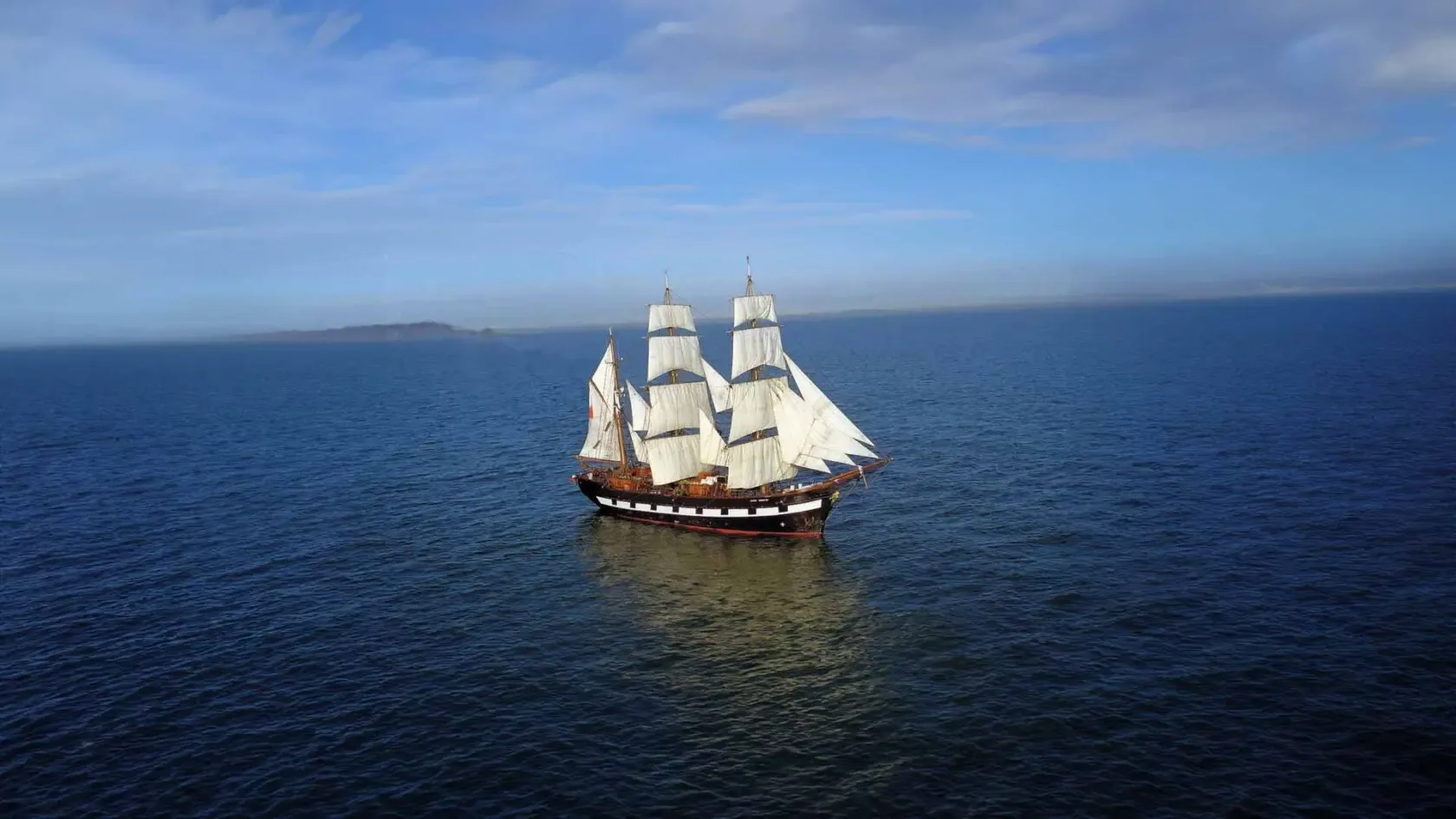
The family sailed on a ship called the Naomi. It was one of four ships that carried the Strokestown emigrants across the Atlantic that summer.
It was a terrible crossing. Fever spread through the ship. Daniel's mother died on board. So did her brother and three of her children.
Daniel survived. So did his sister, Catherine. They arrived in Canada without their mother, in a country they had never seen.
A new life in Quebec
Daniel was taken in by the Coulomb family of Lotbinière, a parish on the St Lawrence River in Quebec. He grew up there and made his life there.
The story did not end in 1847. In 2013, Daniel's great grandson, Richard Tye, came back to Strokestown. The family name had changed from Tighe to Tye along the way. He stood where his ancestor's walk began.
The Irish children's author Marita Conlon McKenna later wrote Daniel's story as a digital storybook, Shoe Stories: Daniel's Story, Black '47. It is the voice you hear on the trail app.
How the National Famine Way shoe stories work on the trail
The bronze shoes are set into the route from start to finish. You will find them at harbours, bridges and locks along the canal. The first ones appear on the road from Strokestown down to the Shannon. The last ones are in Dublin, where the city meets the canal.
The free National Famine Way app links each pair of shoes to a part of Daniel's story. Stand at a pair, press play, and Daniel tells you what happened to him at that point. Some walkers save the whole story for the trail. Others listen to it before they come.
Here are a few to look out for:
- Strokestown Park. The trail starts at the glass memorial wall, which lists the names of all 1,490 emigrants. Look for the shoes nearby.
- Richmond Harbour, Clondra. This is where the road meets the Royal Canal and the towpath begins.
- Mullingar Harbour. The biggest town on the route, roughly halfway to Dublin.
- Carton House Harbour, near Maynooth. One of the Kildare stops, close to the end of the canal's country miles.
- The 5th Lock, Glasnevin. The shoes here mark Daniel's arrival in the city.
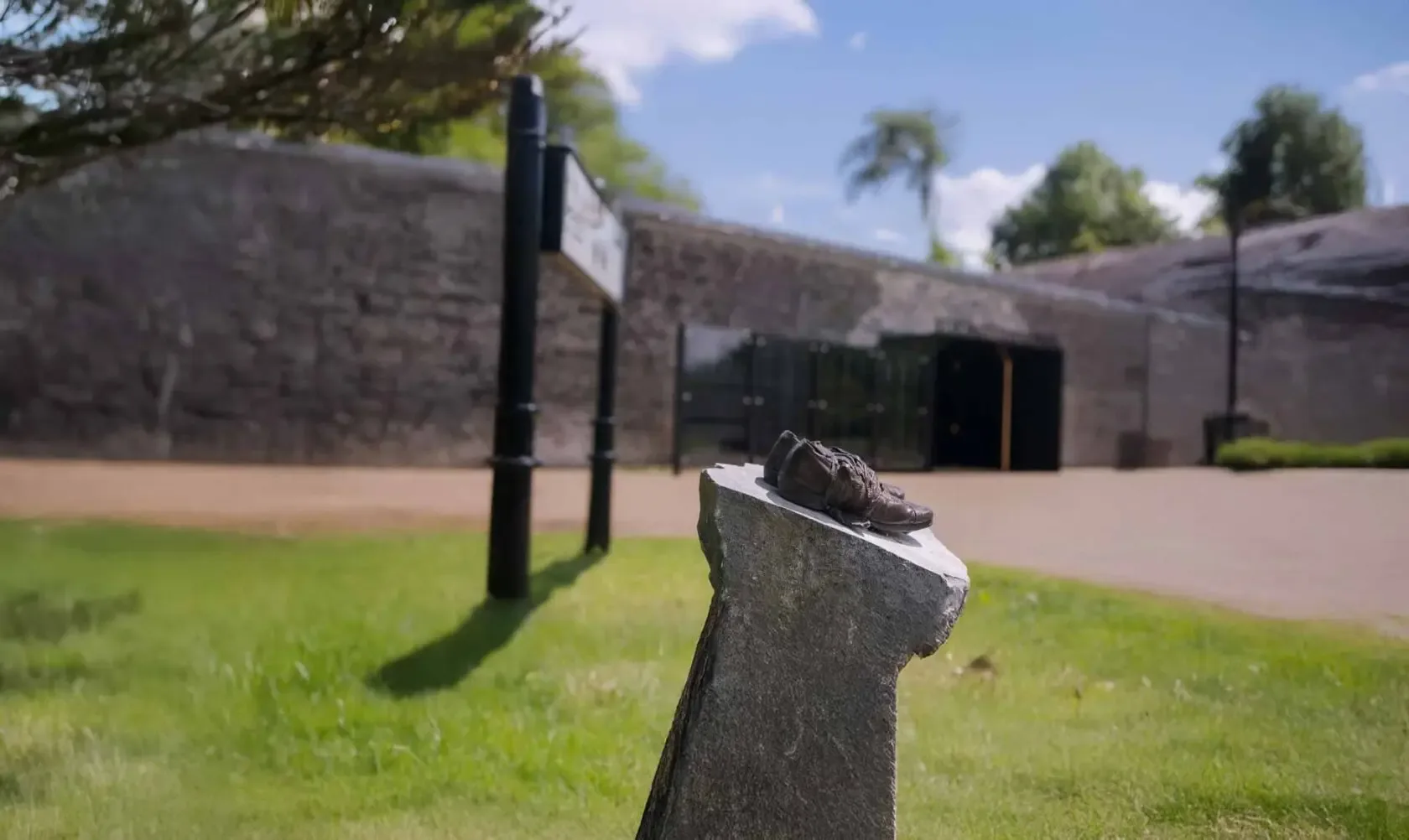
Take the Famine Way Passport with you too. It is the official walker's guide, and you collect stamps at points along the route. The pack also gives you a ship ticket in the name of one of the real famine families. As you walk, you learn what happened to them.
The shoes go global
Daniel's journey did not stop at Dublin, and now the shoes do not either. The Global Irish Famine Way places bronze shoes at the places where famine emigrants landed abroad. Canada came first. The United States launch took place at New York City Hall in March 2026, with sites in New York and Boston planned for this year.
So a walker in Strokestown and a visitor in New York can now stand beside the same small shoes. It is a quiet way to join the two ends of one story.
Walking in Daniel's footsteps
You do not need to be a long distance walker to do this trail. The National Famine Way is almost flat. Most of it is level canal towpath. What it asks for is time, so the story can sink in.
That is why we built our holidays around it. Our 13 day National Famine Way holiday walks it gently, with short days and a rest day in Mullingar. Our 8 day version is for strong walkers who want to cover it in under a week. We book your rooms, move your bags each day and send you the route on an app.
Not sure which length suits you? Read our guide to choosing your Famine Way itinerary. Or start with the people behind the shoes in The Missing 1,490.
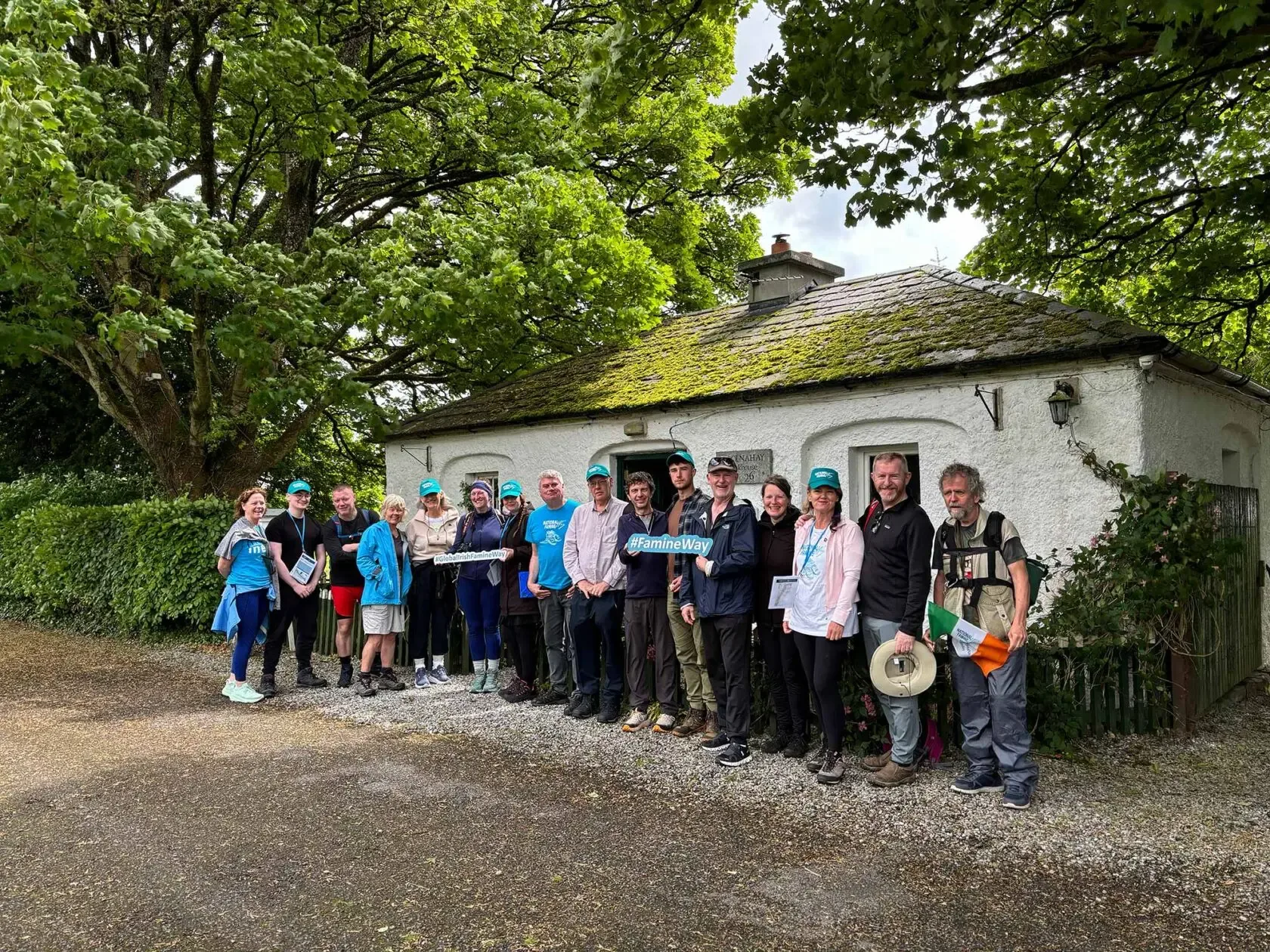
The National Famine Way shoe stories are small. You could walk past them. We hope you don't. Find out more on our National Famine Way page, or ask us anything. We are a family business and we answer every message ourselves.
Frequently asked questions
How many bronze shoes are on the National Famine Way?
There are over 30 pairs of bronze children's shoes along the trail. They run from Strokestown Park in County Roscommon to the Dublin Docklands.
Who was Daniel Tighe?
Daniel Tighe was a twelve year old boy who walked from Strokestown to Dublin in May 1847. His mother and three of his siblings died on the voyage to Quebec. Daniel and his sister Catherine survived, and Daniel grew up with the Coulomb family in Lotbinière, Quebec.
Where did the bronze shoes idea come from?
A local farmer found a pair of bound children's shoes in the roof of a ruined cottage near Strokestown. He gave them to the National Famine Museum, and they became the symbol of the trail.
Do I need the app to follow the shoe stories?
No, but it helps. The free National Famine Way app plays Daniel's story at each pair of shoes. The Famine Way Passport adds stamps and a ship ticket for one of the original families.