Walking the National Famine Way: 8, 10 or 13 Days?
The National Famine Way is 165 km long on the official map. With the short walks to and from your rooms, our holidays cover about 169 km. That distance never changes. What changes is how you break it up.
We offer five ways of walking the National Famine Way. Three cover the whole trail in 8, 10 or 13 days. Two split it in half. This guide helps you choose by the thing that matters most on a flat trail: how far you walk each day.
The five options at a glance
| Holiday | Walking days | Distance | Km per day | Grade |
|---|---|---|---|---|
| 8 days, full trail | 6 | 169 km | 20 to 34 | Challenging |
| 10 days, full trail | 8 | 169 km | 15 to 27 | Moderate |
| 13 days, full trail | 10 | 169 km | 12 to 19 | Easy |
| 6 days, Strokestown to Mullingar | 4 | 82 km | 18 to 24 | Moderate |
| 6 days, Mullingar to Dublin | 4 | 87 km | 15 to 27 | Moderate |
Every holiday starts with an arrival day and ends with a departure day. The 13 day holiday also has a rest day. All of them include your rooms, breakfast, daily luggage transfers and the route on an app.
Flat does not mean short
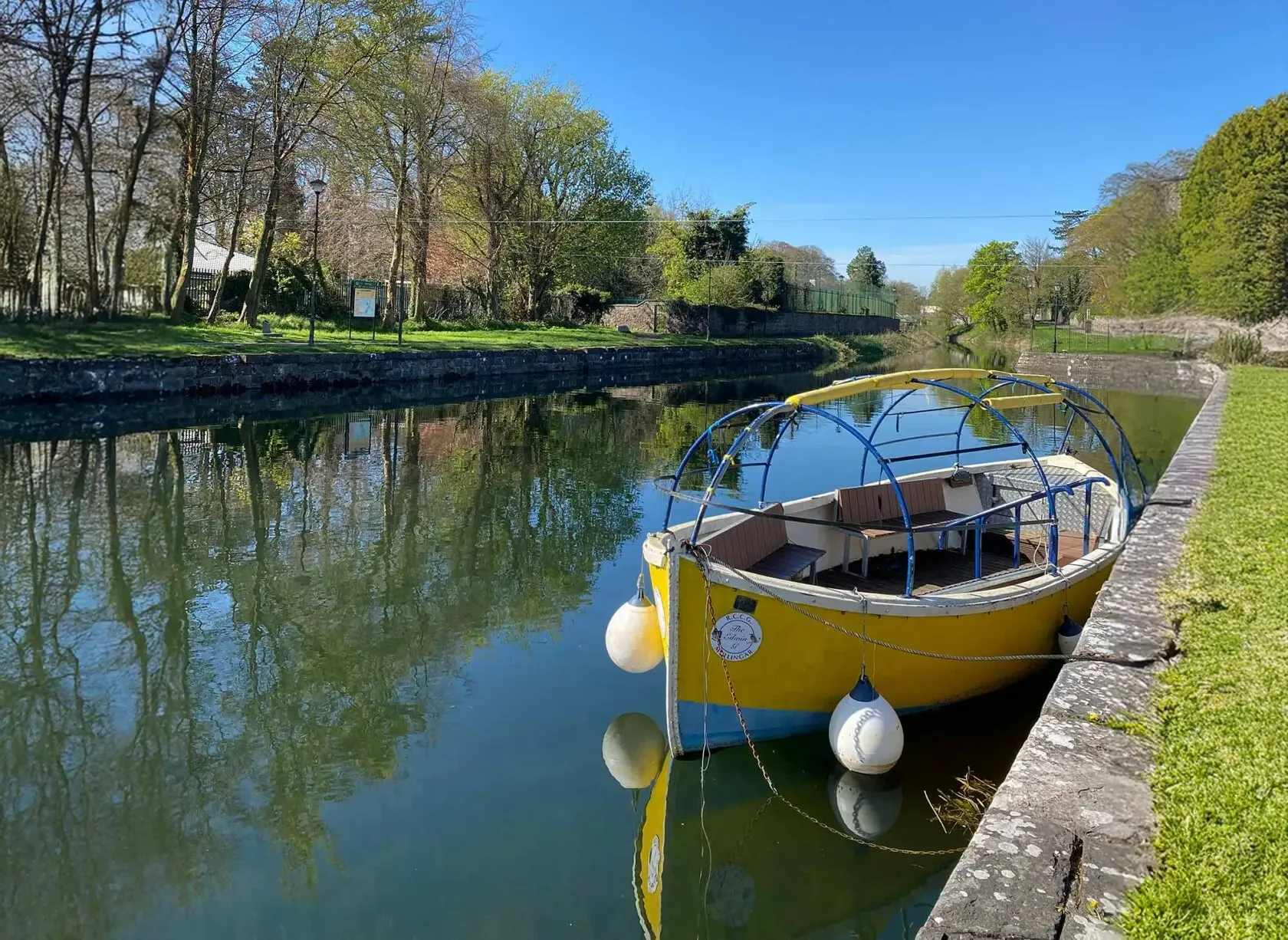
Almost all of the trail is level canal towpath. There are no hills to speak of. That makes it one of the gentlest long walks in Ireland.
But flat walking has its own challenge. You use the same muscles, step after step, for hours. On a hill trail you stop to climb or catch your breath. On a towpath you just keep going. A 30 km day on the flat is still a long day.
So when you pick your holiday, look at the daily distance first. As a rough guide, most regular walkers are comfortable at 15 to 20 km a day. Above 25 km, you want to be a strong, experienced walker. You can read more about how we grade walks on our tour grading page.
The 8 day holiday: for strong walkers
Our 8 day National Famine Way holiday walks the whole trail in six days. It is graded Challenging, not for the terrain but for the distance.
- Day 2: Strokestown to Clondra, 20 km
- Day 3: Clondra to Abbeyshrule, 32 km
- Day 4: Abbeyshrule to Mullingar, 26 km
- Day 5: Mullingar to Hill of Down, 34 km
- Day 6: Hill of Down to Maynooth, 29 km
- Day 7: Maynooth to Dublin, 27 km
Two days stand out. The 32 km day to Abbeyshrule crosses the quiet bogland of Longford, where shops and cafés are few. The 34 km day from Mullingar is the longest on the trail. Pick this one if you regularly walk 25 km or more and enjoy a full day on your feet.
The 10 day holiday: the middle road
Our 10 day National Famine Way holiday spreads the same distance over eight walking days. It is graded Moderate, and it is the one we suggest to most people.
- Day 2: Strokestown to Clondra, 20 km
- Day 3: Clondra to Ballymahon, 24 km
- Day 4: Ballymahon to Ballynacarrigy, 18 km
- Day 5: Ballynacarrigy to Mullingar, 19 km
- Day 6: Mullingar to Hill of Down, 25 km
- Day 7: Hill of Down to Enfield, 15 km
- Day 8: Enfield to Maynooth, 19 km
- Day 9: Maynooth to Dublin, 27 km
The days are a sensible length with time to stop. You can take the short detour to the Corlea Trackway near Keenagh, an Iron Age oak road laid across the bog in 148 BC. You can stand on the Ribbontail Bridge at Moyvalley and see the Famine Pot at Enfield. The visitor centre at Corlea is seasonal, so check opening times.
The 13 day holiday: Takin' It All In
Our 13 day National Famine Way holiday is the slow way, and graded Easy. Ten walking days, none longer than 19 km, plus a rest day in Mullingar.
- Day 2: Strokestown to Tarmonbarry, 18 km
- Day 3: Tarmonbarry to Keenagh, 16 km
- Day 4: Keenagh to Ballymahon, 12 km, with the afternoon free for Corlea
- Day 5: Ballymahon to Ballynacarrigy, 18 km
- Day 6: Ballynacarrigy to Mullingar, 19 km
- Day 7: rest day in Mullingar
- Day 8: Mullingar to Riverstown, 15 km
- Day 9: Riverstown to Moyvalley, 19 km
- Day 10: Moyvalley to Kilcock, 19 km
- Day 11: Kilcock to Clonsilla, 19 km
- Day 12: Clonsilla to Dublin, 15 km
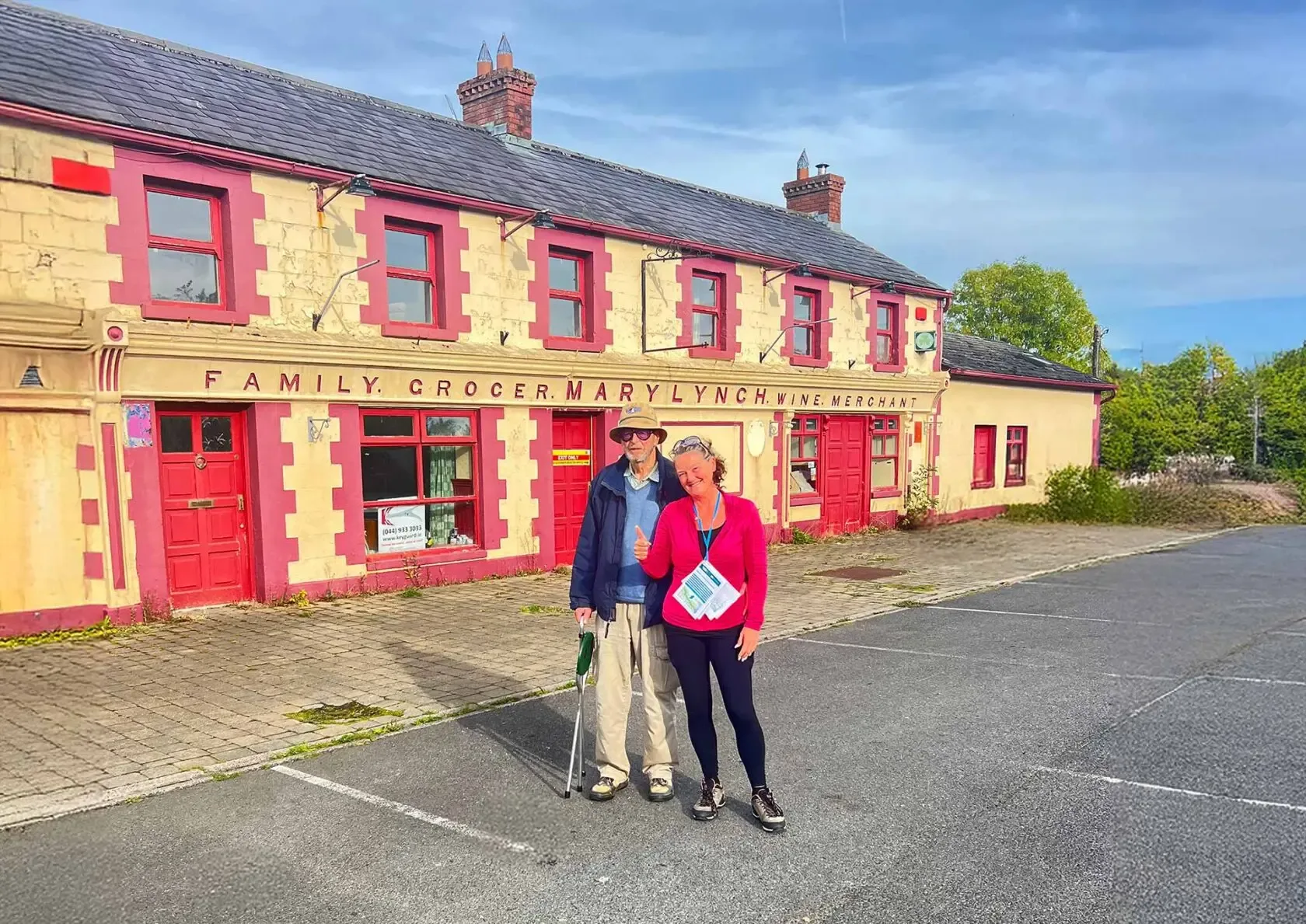
This is the one for anyone who wants time to take the history in. Mullingar has more Famine history than anywhere else on the route. On your rest day you can walk a loop to the old workhouse and the famine graveyard, where around 5,000 people are buried.
Short on time? Walk it in two halves
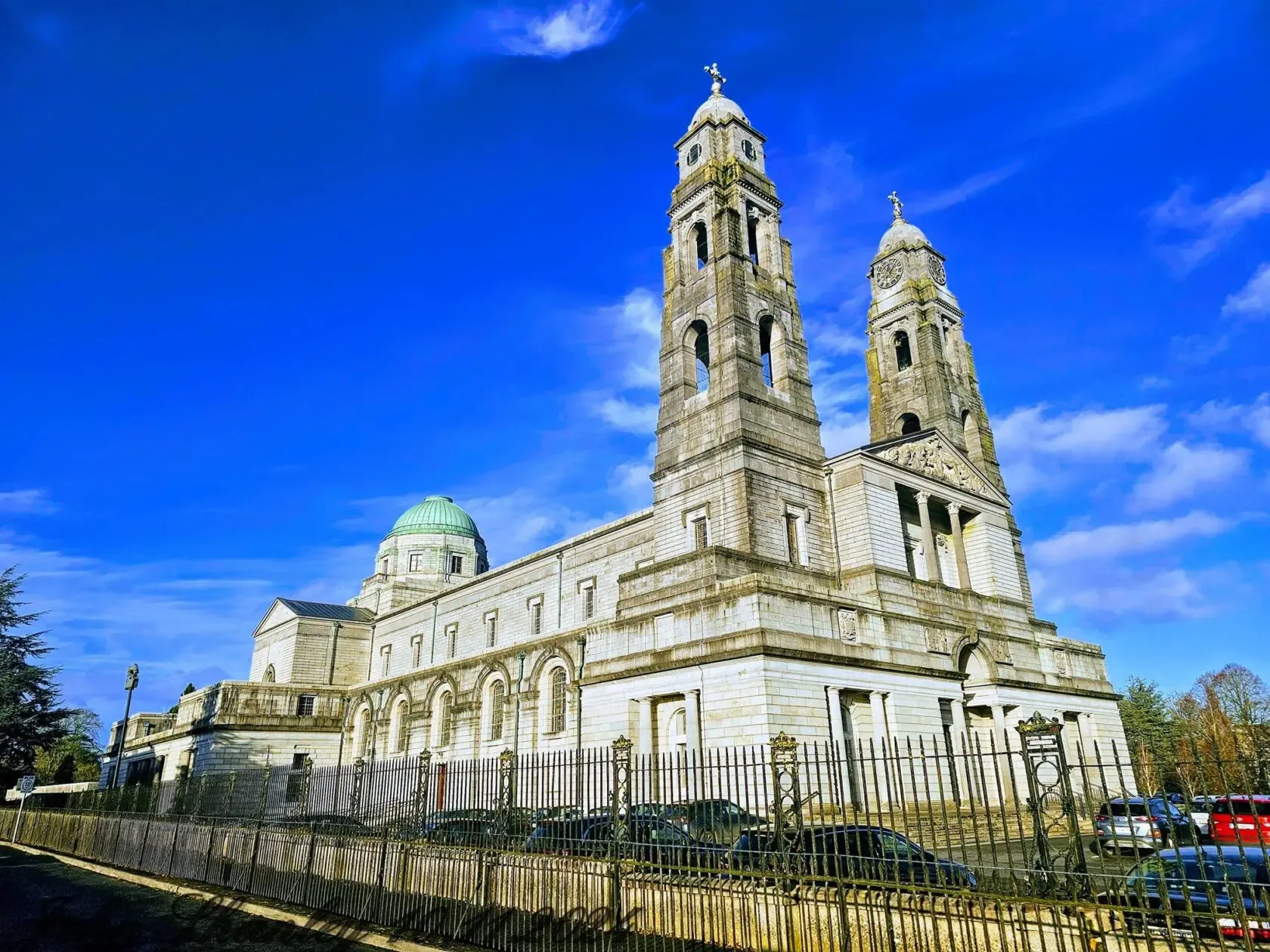
Not everyone has two weeks free. So we split the trail at Mullingar.
- Part A, Strokestown to Mullingar starts at the museum and covers the quiet western half, through Longford and into Westmeath. This is the half with the bog, the Corlea Trackway and the Whitworth Aqueduct at Abbeyshrule.
- Part B, Mullingar to Dublin covers the eastern half, through Meath and Kildare, and finishes at the Famine Memorial on the Dublin quays.
Many people walk Part A one year and Part B the next. Mullingar has direct trains from Dublin, so it is an easy place to start or finish.
Practical tips for walking the National Famine Way
- Plan your lunch. Services are thin on some midland stretches. We can ask your host for a packed lunch. Some hosts provide them, and you pay them directly. Where they don't, there are shops nearby to stock up.
- Pack light. We move one suitcase per person each day, up to 15 kg.
- Pick your month. The trail is open all year, and we run our holidays from April to October. May, June and September are our favourite months for it.
- Choose comfortable footwear. Light walking shoes suit the firm, level towpath well.
- Carry the passport. Collect stamps along the way for your certificate in Dublin.
So which one should you choose?
- You walk 25 km or more regularly and have a week: the 8 day holiday.
- You are a regular walker and want the whole story: the 10 day holiday.
- You want short days and time for history: the 13 day holiday.
- You have less than a week: Part A or Part B.
Still not sure? That is what we are here for. Send us a message and tell us how you like to walk. We are a small family business and we answer every message ourselves. We will suggest the best fit.
Before you go, read about your first day at Strokestown Park and the story of the Missing 1,490. For the canal itself, our Royal Canal Way guide covers the towpath in detail. And see every holiday on our National Famine Way page.
Frequently asked questions
How long does it take to walk the National Famine Way?
Most people take 6 to 10 walking days for the full 165 km trail. Our holidays run 8, 10 or 13 days in total, including an arrival day at Strokestown and a departure day in Dublin.
Is the National Famine Way difficult?
The terrain is easy. Almost all of it is flat canal towpath. The challenge is distance, so choose a holiday with daily stages that suit you.
Can I walk only part of the National Famine Way?
Yes. We split it at Mullingar into two 6 day holidays: Strokestown to Mullingar, and Mullingar to Dublin.
What is the best time of year to walk it?
We run our holidays from April to October. May, June and September are our favourite months for walking the National Famine Way.